Growing and Caring for Aeoniums
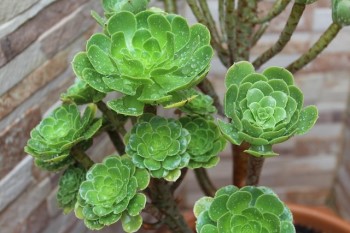
Aeoniums are succulent, meaty plants that are indigenous to North Africa, Madeira, and the Canary Islands. They belong to the Crassulaceae family and range in height from a few centimeters to a meter. They have rosettes of shiny, waxy leaves. They may produce clusters of tiny flowers in late winter or early spring, but their unique, peculiar shapes and foliage-which can be variegated in white, yellow, and red or appear in hues of green or purple-black-are the main reasons they are planted. Aeoniums are great houseplants that require very little care. They thrive on neglect; letting the soil dry out between waterings will increase the plant's strength and color vibrancy. When grown with other succulents or cacti that do well in comparable growing environments, they look fantastic. They can also be cultivated outside in the summer, in a sunny, well-drained border, or in a pot alongside summer bedding plants.
Aeonium, tree houseleek
Aeonium spp.
Crassulaceae
Succulent
3-36 inches tall and 6-12 inches wide
Thrives in full sun to partial shade
Loamy and sandy
Grows best in acidic to neutral soil
Blooms in Spring and winter
Pink
9-11, USDA
Canary Islands, Africa
How To Care Aeoniums
The primary maintenance needs for aeonium growth are as follows: Aeonium plants should be kept in full or moderate sunshine. Soil should be kept damp but not soggy. Plant in a standard potting mix supplemented with perlite or sandy loam. Grow as potted plants on patios or decks in colder climates, or as perennials in the ground in warmer climates. Depending on how mature your plant is, fertilize during the growing season.
Light
Aeonium plants should be kept in full or moderate sunshine. Light shade may be required in hot summers and desert environments, particularly in the afternoon. If the plant is being grown indoors, it should be placed in a window that receives six to eight hours of bright, indirect light each day. Your aeonium plants should be moved if they have white or brown patches on the tops of their leaves, which indicate that they are receiving too much direct sun.
Soil
Aeonium should be planted in sandy loam or normal potting mix that has had perlite added to it. Aeoniums require more moisture than this mixture usually provide, so avoid putting them in a mixture meant for succulents and cacti. You should add peat moss to the mixture to increase its porosity if you want to grow your aeonium plants in a conventional garden bed with dense soil.
Watering
Indoors, let the soil dry for at least an inch or two before watering the plant's base. Aeonium plants should receive all the water they require from rainfall when planted outdoors. During the hottest parts of summer and winter, outdoor plants usually lie dormant. During this time, you can drastically cut back on watering and only give them moisture when you see the leaves starting to wither. Even though these plants prefer more moisture than many other succulents, root rot will result from either too much moisture or letting them sit in wet soil.
Temperature & Humidity
The primary growth season for aeoniums is late winter through spring, when temperatures are mild (65 to 75 degrees Fahrenheit) and humid. However, they can grow in high heat if they are planted in moist, shaded soil. Since the majority of aeonium types are only hardy in USDA zones 9 through 11, they will typically be cultivated indoors in many locations.
Fertilizer
Use a half-strength balanced fertilizer to nourish your aeonium plants during the growing season. Your aeoniums' maturity and the nutritional quality of your soil will determine how often you fertilize them. While older plants might survive on a single spring feeding, younger plants might benefit from monthly treatments. Don't apply too much fertilizer to the plants' leaves; instead, always apply it at the soil level. When they are inactive, do not feed them.
Pruning
Pruning aeoniums is beneficial for controlling lanky growth, producing bushier plants, & propagating new ones. Pruning is best done during the active growing season (autumn to spring). Pruning involves cutting off the rosette or stem tip. Let the cut to callus for a few days before replanting it or allowing new growth to sprout from the old stem to create a fuller appearance. Always use clean tools and remove wasted flower stems or leggy portions to promote branching and compact form.
Propagating
The most dependable way to propagate Aeonium is through cuttings of more recent stems. When planted in a growth medium that drains properly, the thinner side branches will immediately develop roots. Stems that have flowered should not be used since they will naturally die back after the blossoms are gone and lack the energy to produce new root shoots. Aeonium stems with legs make excellent cuttings as well. To create a more compact shape, they can be planted deeper in the growing media. How to Propagate Aeonium: Cut a stem that is 4-6 inches long and has a fresh, unbloomed top growth. Before planting the cutting in the starting media, let it cure for three to four days. This will create a callous over the stem's cut end, preventing any rot from developing before roots may start to emerge. Pour the pre-moistened potting media of your choice into a small yet tall container. At least half of the stem should be above the soil when you slide the cutting into the pot. Water from the bottom in a basin of filtered tap or rainwater, or from the top (gently so as not to disturb the potting media).
From Seed
Since seeds resemble dust, they should ideally be sowed in the spring when it's warm and sunny. You should utilize strong artificial light for at least 15 to 16 hours a day if you are planting in a different season, such as winter. The seeds should not be pressed firmly or covered with dirt. To keep the air within your container damp, cover it with plastic wrap and keep it closed until germination occurs. You should use a lot of water when you are sowing. There is no need to water again if the interior is sufficiently moist. The ideal temperature is between 20 and 25 degrees Celsius (68 and 76 degrees Fahrenheit), but it can dip as low as 15 degrees Celsius (59 degrees Fahrenheit) at night. Temperatures above 25 degrees Celsius will prevent germination and cause a heat-induced dormancy until lower temperatures allow them to germinate. Within seven to twenty-one days, seeds germinate quite quickly and uniformly. The soil should never be allowed to entirely dry out during the developing phase, and the seed tray or pot should be stored in a light, shaded area. The seedlings should be moved once they are used to being in the sun. However, only the strongest and most active plants should be transplanted.
Potting & Repotting
When potting your aeonium, choose a container with plenty of drainage holes at the bottom to prevent wet soil, standing water, and root rot. Maintaining the proper soil moisture can also be accomplished with a container constructed of a moisture-wicking substance, such as clay or terra-cotta. During the spring, when the plants are actively growing, try to pot (or repot) your aeonium. Every year, you should replenish the soil by either topping up your current container or, if the plant has outgrown it, potting it up. Slowed growth, the soil drying up too rapidly, or roots emerging from the base are all indicators that your aeonium has become too big for its container. Every two to three years, the majority of varietals are often ready for a new pot.
Overwintering
Aeonium prefers a temperate Mediterranean climate. Bring them inside before the first frost if they are being grown in containers. This plant can withstand temperatures between 25 and 30°F.
How To Bloom
Aeoniums require plenty of bright light (6+ hours), well-draining cactus soil, and moderate watering during their active seasons (fall/spring), allowing the soil to dry in between waterings. They can be encouraged to bloom by simulating natural conditions, but keep in mind that many species are monocarpic (flowering branch dies), thus propagate cuttings for new plants.
Pests, diseases, and other problems
Typical aphids, mealybugs, mites, and scale are drawn to aeoniums. But ants can also be a problem. Ants are drawn to succulents by the sweet compounds secreted by mealybugs and aphids. Ants are difficult to eradicate from succulents with rosette leaves or tight buds. The best way to attract ants is to place ant bait adjacent to the plants. You focus on getting rid of the other pests once the ants are gone. To get rid of these insects, mist the plant with water or a moderate insecticidal soap.