Growing and Caring for African Daisy
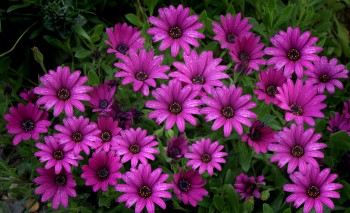
The hardy annual African daisy (Arctotis spp.) is indigenous to South Africa. The silvery gray foliage of these plants accentuates their vibrant blossoms. In temperate areas, the flowers can persist for a considerable amount of time. The flowers have a little "eye" in the middle and a ring of eye-catching, colorful outer petals. The African Daisy flower's eye can have a variety of hues, most commonly brown, gold, pink, or green. In Zones 9-11, the plants are resilient.
African Daisy
Osteospermum spp.
Asteraceae
Perennial, annual
1-2 feet broad and 1-3 feet tall
Thrives in full sun
Well-drained and moist
Prefers acidic soil
Blooms in Fall, summer, and spring
Orange, pink, yellow, purple, and white
10-11, USDA
Africa, Asia
How To Care African Daisy
African daisies thrive in both containers and the ground. Late spring to early summer and late summer to early fall are when blooms are at their greatest. African daisies are best grown in conjunction with other plants that will provide visual appeal at the height of summer, as they cease to bloom during hot spells. African daisies will return each year within their hardiness zones because they are perennials. Take cuttings to grow new plants indoors during the winter in colder climates before the first frost. When cultivated in a setting that suits them, these flowers require very little care. Make sure the soil has adequate drainage and plenty of sunlight. Throughout the growing season (spring to fall), schedule frequent fertilization and watering. To promote reblooming, deadhead the flowers by removing the spent blossoms.
Light
Full sun is ideal for African daisy blooms. Although they can withstand some shade, this will probably result in fewer flowers. In general, the flowers open in reaction to light and close at night and in cloudy conditions. However, certain newer cultivars, such as '4D Pink', '4D Silver', and '4D Berry', stay open at night.
Soil
African daisies favor soil that is rich in organic matter, has good drainage, and has a slightly acidic pH. When planting, incorporate compost or other organic matter into the soil to enhance drainage and supply nutrients. Some types can grow up to 12 inches wide, so plant them at least 12 inches apart to allow them to spread. After the last frost in the spring, African daisies can be planted.
Watering
African daisies still require at least one inch of water each week to thrive, while being somewhat drought-tolerant once established. The plants will slow down and go dormant during dry spells or periods of extreme heat. Keep the soil consistently moist. However, avoid overwatering because damp soil might promote illnesses like root rot.
Temperature & Humidity
African daisies grow most abundantly in moderate conditions. Although frost will harm or kill them, they can withstand nocturnal temperatures as low as 40°F. As long as they have adequate soil drainage, watering, and air circulation, humidity usually doesn't bother them.
Fertilizer
For optimal growth and bloom, these flowers require a lot of food. Throughout the growing season, apply a balanced fertilizer to blooming plants once a month in addition to incorporating compost into the soil. Even more frequent feeding may be necessary for potted plants.
Pruning
Early in the growing season, pinching young African daisies two or three times produces a large, bushy plant with a robust stem. Just remove the stem to the second set of leaves by pinching the tips of fresh growth. Pinching the plant after flower buds form will cause it to take longer to blossom. A straightforward method to promote continuous flowering throughout the season is regular deadheading, which is pinching or clipping wilting blooms down to the next set of leaves. The plant will naturally go to seed and stop blooming much earlier than you would like if it isn't deadheaded. In summertime, African daisies, like many other plants, can grow tall and lanky. A light trim promotes fresh flowers and keeps the plant tidy. Use garden shears to trim one-third to one-half of each stem, focusing especially on older branches, to give the plant a summer haircut. Fresh, new leaves will grow as a result of the trim.
Propagating
Gathering seed is not the greatest technique to get new plants for the next year because many African daisy plants are hybrids. On the other hand, propagating the plants from cuttings is simple. Cut 3- to 5-inch-long cuttings with at least two sets of leaf nodes in late fall, before the first frost, using sharp bypass pruners. Pinch off the flower buds or choose stems that do not bloom. After removing the leaves from the cutting's lower half, dunk the end into rooting hormone. Place the slice onto a flat that has been filled with seed-starting mix. Cover the flat with a plastic dome and place it indoors in bright indirect light at 60ºF to 68ºF. It should take four to six weeks for rooting to occur. Place the seedlings in separate pots that have been filled with potting mix. Plant them outside after the final spring frost.
From Seed
You might be able to get seeds for some of the pure species kinds of African daisy, like Osteospermum ecklonis, but the hybrids offered in garden centers are typically not easily accessible as seeds. Here's how to start plants from seeds: Place the seeds directly on the surface of a pot filled with regular potting mix eight to ten weeks before to the last winter/spring frost. Cover the seeds very gently (they need light to germinate). Until the seeds sprout, keep them wet. Until it's time to put them outside, keep the seedlings in bright indirect light. Before being planted outdoors, indoor plants should be hardened off for a full two weeks. As soon as the seedlings are planted, pinch them back to promote bushier growth.
Potting & Repotting
In a pot with adequate drainage holes, plant African daisies. A potting mix that drains adequately is essential. Aim to water more often than the garden's plants. African daisies should be placed in an area with full sun. Because nutrients can seep out with water, potted African daisies may require more frequent fertilization. African daisies don't require repotting because they are often grown as annuals.
Overwintering
Sadly, African daisies have poor winter survival. You can take your potted plants indoors, but they may not always make it. Store them in an area with plenty of light, and only give them water when they are completely dry.
How To Bloom
Although African daisies often bloom readily on their own, a number of circumstances can result in decreased blooming. Here's how to make your African daisies bloom: Spent flowers should be deadheaded to encourage more blooming. Every two to three weeks, fertilize. More fertilizer is needed for potted plants. African daisies should be protected from intense heat and given more water during dry spells. If the plants are lanky and not fully blossoming, move them to a more sunny spot.
Pests, diseases, and other problems
These flowers often don't have many issues or pests. If you grow them in the ideal conditions-full sun and well-draining soil-you won't likely have many issues. However, fungi and other issues like Phytophthora crown and root rot, powdery mildew, Pythium root and stem rot, Rhizoctonia root and stem rot, and Verticillium wilt could affect your blooms if the soil is soggy. Aphids, fungus, gnats, slugs/snails, spider mites, thrips, and whiteflies are among the pests that can occasionally harm African daisies.