Growing and Caring for African Milk Tree
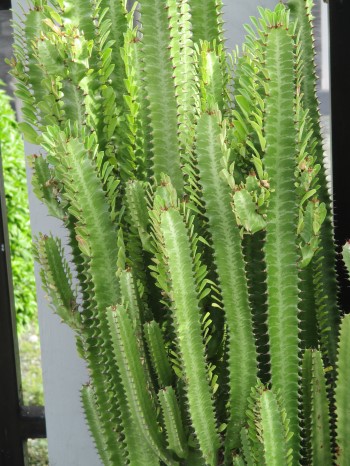
Native to Central Africa, the African milk tree (Euphorbia trigona) is a succulent that grows quickly. Known by names like candelabra cactus, cathedral cactus, and good luck cactus, it is sometimes mistaken for a cactus due to its upright, ridged branches and sharp thorns. The teardrop-shaped leaves on its triangular green stems becoming a lighter shade of green as they develop. This robust plant adds rich greenery wherever it is placed, reaching a maximum height of 9 feet outside and around half that height indoors. Although African milk trees, like all Euphorbia species, are hazardous to people and pets, they are well-liked for their low-maintenance care, air-purifying properties, and traditional medicinal purposes.
African milk tree, African milk bush
Euphorbia trigona
Euphorbiaceae
Succulent
1-2 feet wide and 6-9 feet tall
Thrives partial shade
Well-drained and loamy
Prefers neutral soil
Blooms in Summer and spring
White
9-11, USDA
Africa
How To Care African Milk Tree
The following are the primary maintenance needs for an African milk tree: Place it in an area with partial sunlight outside or bright indirect light inside. Ensure that the soil has good drainage. Give it very little water. It should not be exposed to temperatures below 50 degrees Fahrenheit. In the spring and summer, fertilize it once a month. To keep it from becoming top-heavy, prune it.
Light
Although it can withstand direct sunshine in the morning or late afternoon, the African Milk Tree prefers bright, indirect sunlight. Growing it indoors is best done next to a window that faces south or west so it may receive plenty of light all day. The plant tends to grow toward the light, so rotate it frequently to promote uniform growth. It can tolerate full sun outdoors, but in really hot areas, it should be protected from the severe noon heat since too much intense light might burn the stems.
Soil
The African Milk Tree needs well-draining soil to avoid root rot because it is a succulent. The best option is a commercial cactus or succulent combination. For improved drainage, you can also make your own mixture by mixing sand, perlite, and potting soil. Avoiding water-retentive soils is crucial because this plant's roots are prone to rotting in wet conditions. To avoid soggy soil, make sure your pot has drainage holes to let extra water out. The ideal soil pH range for this plant is between 6.1 and 7.8.
Watering
Although the African Milk Tree can withstand a lot of drought, it still needs regular watering to stay healthy. Make sure the soil completely dries out in between waterings. One of the most frequent mistakes made with this plant is overwatering, which can result in root rot and other problems.
Temperature & Humidity
Place your plant in an area that receives a combination of full sun and moderate shade throughout the day because African milk trees can become scorched by excessive bright light. Root rot can be avoided with plenty of light and airflow.
Fertilizer
Give your African milk tree a monthly application of half-strength diluted water-soluble fertilizer during the plant's growing season in the spring and summer. In the fall and winter, when it is dormant, do not feed it.
Pruning
African milk trees can grow very tall and have shallow roots, which makes them prone to becoming top-heavy or even toppling over. For this reason, pruning is crucial. To keep the plant stable and stop it from falling, regular pruning is required. When pruning, always use gloves to protect yourself from the toxic sap and make clean cuts with a sharp, sterile knife. To prevent an unbalanced burden that could cause the plant to lean or pull out of the soil, concentrate on pruning the plant equally on all sides. Following pruning, the cuts will naturally heal and continue to develop steadily and healthily.
Propagating
Stem cuttings are the main method used in the simple process of propagating an African milk tree. Choose a robust, vigorous stem from the plant. Seek out a firm, erect, mature, and undamaged portion. When handling the plant, always wear gloves and eye protection because it generates a toxic sap that can irritate the skin. Be especially careful not to touch the sap because it is toxic. Cut a 4-6-inch portion of the stem with scissors or a sharp, sterile knife. To guarantee a healthy fresh beginning for the cutting, make a clean, straight cut. For a few days, let the cutting end get callous by placing it in a dry, shaded area. When the cutting is planted, this callousing procedure helps keep it from decaying. Use a variety of succulents or cacti that drain well. Sand or perlite can also be added to the mixture to enhance drainage. Plant the cutting in a tiny pot filled with the prepared soil after it has become calloused. To provide stability, insert the cutting a few inches deep. Water lightly after planting. Going future, to prevent root rot, let the soil dry out in between waterings. Water the cutting very seldom at first until it begins to root, which may take many weeks. The freshly planted cutting should be placed in an area with indirect, bright light. Steer clear of direct sunlight since it can stress the cutting in its early stages of growth. The cutting may not grow roots for a few weeks. You can start taking care of it like a mature African Milk Tree after it has taken root.
From Seed
African milk trees can be grown from seeds, however the seeds are rarely commercially accessible because they are difficult to germinate and only last for a short length of time.
Potting & Repotting
When potting African milk trees, it's crucial to provide enough drainage and avoid overwatering. The ideal container for this succulent is a porous clay pot that can absorb more moisture. The optimum water drainage is possible with sandy soil or potting mix designed especially for succulents, especially when perlite or pumice are added. As the plant continues to grow higher, repot it every year or two. This will guarantee that there is sufficient space for the roots to support it (with a little assistance from stakes).
Overwintering
The cold will kill African milk trees. It's crucial to put them in the ground only if your climate permits, as they usually won't thrive in temps below 50 degrees Fahrenheit. When the temperature drops, potted plants must be taken indoors. To reduce humidity, place your succulent in a room with adequate air circulation and place it in a brilliantly lit window that receives indirect sunlight.
How To Bloom
The African Milk Tree rarely blossoms in culture, especially when planted inside, thus its beautiful form is the main reason it is grown. When it does bloom, the yellow or white flowers are tiny and barely noticeable. They appear at the tops of the branches, although they rarely bloom, especially when they are not in their native environment. The plant usually blooms in the summer if it is grown under perfect circumstances. But as was already noted, this plant rarely produces flowers in cultivation, especially when it is cultivated indoors.
Pests, diseases, and other problems
Pests and illnesses typically don't affect a healthy African milk tree. But keep an eye out for the cotton-like strands that mealybugs produce. To get rid of them, combine water and a few drops of mild dish soap, then use a towel dipped in the mixture to wipe the bugs away. Additionally, you can use a paper towel and rubbing alcohol to get rid of pests or use a garden hose to spray them away. Overwintering your plant can lead to fungal issues like cork disease, which causes areas of cork to appear on the stems. Cut off the diseased stems to try to save the plant. Succulent yellowing or browning could also be a sign of overwatering-induced root rot. You will probably have to get rid of your plant completely in this situation. Overwintering and underwatering African milk trees are two of their most frequent issues. This may result in wilted and yellowed leaves. fading foliage. It is far easier to prevent this problem than to fix it, so make sure your plant is in a warm place and water it just enough so that the soil dries out in between waterings but is not always dry.