Growing and Caring for Agapanthus
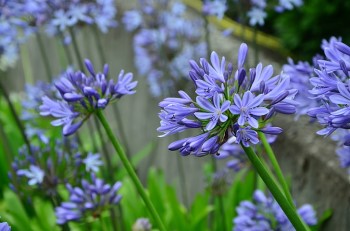
African lilies, or agapanthus, are perennials that are indigenous to South Africa. They are a great cut flower. They are perfect specimens for containers because of their loose, globe-shaped summer flower heads in shades of blue, lilac, and white. Agapanthus can be deciduous or evergreen. If planted in a protected area, deciduous agapanthus may withstand British winters and is more resilient than evergreen varieties. They are ideal for a seaside garden since they can withstand salty sea winds.
African lily, Lily of the Nile
Agapanthus
Agapanthaceae
Perennials
2 feet wide, 3 feet tall
Thrives in full sun to partial shade
Sand, Loam, Clay, and Chalk
Alkaline, Acid, and Neutral
Blooms in June, July, August, and September
Blue, purple, white
7-10, USDA
South Africa
How To Care Agapanthus
Depending on whether the species or hybrid is deciduous or evergreen, there are differences in how you should maintain your agapanthus. The most important maintenance issue is how to keep your agapanthus safe in the winter. Agapanthus need six hours of sunlight each day. This plant likes sandy, loamy soil that drains well. Once agapanthus reaches maturity, cut its weekly watering rate in half from 1 inch. The best temperature range for agapanthus is between 50 and 60 degrees Fahrenheit; plants can be trimmed in regions with excessive humidity. Fertilize once in the spring and one again two months later. Use weather protection techniques because evergreen varieties are substantially more susceptible to cold temperatures. Deciduous types can tolerate light frost on occasion, although frozen ground can harm the plant's root.
Light
For optimal blooming, agapanthus needs six to eight hours of full light per day. Plants benefit from afternoon shade in hot regions.
Soil
Although agapanthus may grow in a variety of soil types, it thrives in light, sandy loam, fertile soil with good drainage. While other species thrive in neutral soil with a pH of 7.0, Agapanthus africanus likes slightly acidic soil with a pH of 5.5 to 6.5.
Watering
Until plants are established, water them often at a rate of 1 inch per week; after that, cut back to 1/2 inch. Agapanthus cannot withstand standing water and is resistant to drought. Watering should be drastically cut back or stopped during the winter until the next spring, when fresh growth starts.
Temperature & Humidity
The ideal temperature is from 50 to 60 degrees Fahrenheit. Some species may endure temperatures as low as 20 degrees Fahrenheit. However, many evergreens should be brought indoors when temps hit 50 degrees. Thinning plants to allow for sufficient air circulation can help reduce fungal infections, especially in high-humidity settings.
Fertilizer
Once in the spring and again two months later, apply a balanced fertilizer. Alternatively, use a fertilizer that has a slightly greater phosphorous NPK, like a 5-10-10 ratio. Excessive nitrogen feeding might cause flower stems to fail to reach their full height or limit blooms. After August, don't fertilize.
Pruning
Reducing the amount of agapanthus depends on personal taste. The dried flower heads, according to some gardeners, are visually appealing and offer much-needed winter interest. When a flower reaches the end of its useful life, some gardeners choose to cut it off, a technique known as deadheading. By doing this, plants are able to conserve energy for the bloom of the following year rather than waste it on seed formation.
Propagating
Agapanthus can be propagated via division or seed. Since germination often takes one to four months, seeds should be sown in the spring. From seed, it will take three to five years to bloom. Every four to five years, root-bound potted plants can be divided. Although it can be done at any time, division is best done after flowering. Cut the clump into portions with roots connected using a very sharp knife, then pot the sections. It's possible that divisions won't appear until the next year. Tissue culture is used to propagate commercially selected clones.
From Seed
If you don't want to buy fresh ones, you can easily gather seeds from dry brown pods that mature in late summer and early fall. Sow the seeds right away because they don't last long. Be aware that plants grown from gathered seeds may differ from the original. It can take three to five years for seed-grown plants to bloom. Collect seed trays and seed starting medium in order to proliferate from seed. Fill seed trays with moistened, well-drained seed starting medium. If you want to accelerate germination, soak seeds for a few hours before planting. Top the medium with the seeds, then lightly cover with grit or medium. Place the soil in a sunny spot with temperatures between 68 to 86 degrees Fahrenheit and water it lightly to keep it moist but not soggy. In roughly a month, germination takes place. Sprouts should be moved to a cooler area (about 58 degrees Fahrenheit) with plenty of light. After the last frost, plant in the garden or put the well-developed root system into 12-inch pots.
Potting & Repotting
Agapanthus thrives when root-bound and grows well in pots. Every two years, individual plants should be potted up into containers that are four inches wider to allow for spread. In 24-inch containers, plants can be cultivated out until their blooms begin to fade, at which point they should be divided. Select a 12-inch-wide container with drainage holes if you want to plant agapanthus in a pot. For drainage, fill it with a gently moistened mixture of potting soil or compost and sand or grit. In the middle of the pot, create a shallow indentation. With the pointed end facing up, plant rhizomes one inch deep and cover with potting medium. To give the plant time to adjust, place the container in indirect sunlight and stop giving it water for a few days. Until the plant is well established, move the pot to a more sunny location and add one inch of water each week. Next, cut back on water to half an inch per week.
Overwintering
Although agapanthus are hardy plants, they struggle with winter hardiness. Evergreen agapanthus should be either thickly mulched or planted in pots and brought indoors for the winter because it is unlikely to withstand cold winter temperatures. If you don't live in USDA hardiness zones 9 and 10, it is better to avoid overwintering them outside. In USDA zone 6, deciduous agapanthus is regarded as half-hardy; nevertheless, if there is little frost, certain hybrids may survive the winter. After leaves die back in the fall, rhizomes can be plucked, preserved, and replanted in the spring. During the winter, there is less or no water. Agapanthus tubers should be allowed to dry for a few days before being stored. After that, wrap them in newspaper and keep them somewhere cold and dark. Keep it between 40 and 50 degrees Fahrenheit.
How To Bloom
Inadequate light, lack of winter protection, and cold weather are all blamed for failure to blossom. Six to eight hours of sunlight per day are ideal for agapanthus blooming. Potted plants should be moved indoors or into a sheltered area, and mulch should be used to protect them over the winter. Agapanthus should be fed in the spring with a fertilizer that contains more phosphorus and again in the middle of the growing season.
Pests, diseases, and other problems
When the growing season comes to a conclusion, the leaves of evergreen kinds may turn yellow. The withering back of older leaves is a natural process that can be eliminated. The decaying foliage will be replaced by new leaves that emerge from the core. The plants may need to be divided if there are fewer flowers. Remove older plants from the center of the clump and replant the newest growth.