Growing and Caring for Almond Trees
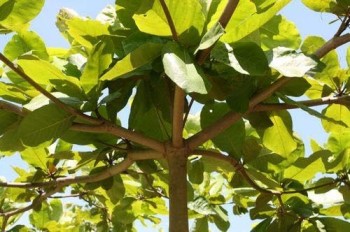
Almond trees (Prunus dulcis) bear almonds. The almond tree is a kind of fruit tree endemic to nations in the Middle East. Almond trees belong to the same genus as peach trees. While they're typically considered nuts, almonds are really a sort of stone fruit called a drupe. Drupes are fruits made up of an outer hull and a hard shell that holds a seed. Other frequent drupes include peaches, cherries, and olives. Almonds are different from other drupes in that the seed is the only portion of the fruit that may be eaten.
Almond tree
Prunus dulcis
Rosaceae
Tree
10-25 feet tall and 10-15 feet broad.
Thrives in full sun
Loamy and well-drained.
Acidic, neutral, and alkaline
Blooms in Spring
White to pale pink
7-9, USDA
Africa and Middle East
How To Care Almond Trees
During the initial year, keep your almond tree hydrated during dry times, thoroughly once every few days to promote deep root development. To avoid competing for water and nutrients, keep grass and weeds away from the tree's base. Ideally, add an annual mulch of well-rotted compost, 5-8cm deep, over the tree's roots zone. Almond fruits are harvested in mid-autumn. The fruit capsules beginning to crack are a good indication that the nuts are ready. For many weeks, place the fruits on a dry, sunny windowsill or bench indoors, making it simpler to split and remove the nuts.
Light
The tree requires at least six to eight hours of full light every day to produce the most blossoms (and potentially nuts).
Soil
The soil should be well-drained and have a pH of 6.0 to 7.0. Sandy soil is optimal. Almonds do not grow well in poorly drained or heavy clay soils. Till the soil well before planting so that the roots may strike down deep.
Watering
Almond trees are drought resilient and flourish in hot, dry summers, but they require frequent irrigation. Water your trees at least once a week while they are young, skipping only if there is a lot of rain. Keep the soil well moist but not too wet; soaking your trees might cause root rot.
Temperature & Humidity
Almond trees have quite strict temperature needs. Between November and January, they require at least 300 chilling hours at temperatures below 45 degrees Fahrenheit, followed by a lengthy frost-free period, as almonds take seven to eight months to develop. The trees are quite susceptible to strong cold, and a spring frost can be harmful to the blossoms. Summers must be hot, with temperatures ranging from 75 to 95 degrees Fahrenheit and little humidity.
Fertilizer
Fertilize your almond tree throughout the spring. Wait until spring to begin fertilizing your tree. Young trees can benefit from tiny quantities of nitrogen fertilizer sprayed consistently throughout the growth season, but adult trees require far less fertilizer. Once your tree has established itself and begun producing, give it a one-time treatment of two pounds of urea and it will be set for life.
Pruning
Almond trees require little pruning. If you need to trim out dead, diseased, or damaged shoots, do it during the tree's dormant period in winter. Thin the stems as needed to create an open head of branches, and remove any shoots that are developing on the trunk.
Propagating
The most prevalent method of propagation for almond trees is budding. Dormant wood is harvested in the winter while the trees are dormant and preserved till spring. T-budding is often done in the spring and includes connecting a bud from one variety with the rootstock of other. A bud is plucked from a parent with ideal traits and matures into a new tree. Grafting is another method used to propagate trees. During dormancy, cuttings are obtained from trees and grafted onto a suitable rootstock in spring.
From Seed
While almond trees may be grown from seed, starting with a sapling gives you the best chance of establishing a good, nut-bearing almond tree. Almond trees, like other nut trees, do not self-pollinate, hence growing a nut-bearing almond tree from seed needs cross-pollination. Unless you have enough space to plant two or more trees, start with a seedling.
Potting & Repotting
Potting an almond tree entails using large, well-draining containers with amended soil, making sure there are drainage holes, and transplanting every two to three years into slightly larger pots in the spring. Repotting, on the other hand, concentrates on gently spreading roots, planting at the same depth (or slightly higher), keeping the graft union over soil, and firmly settling soil with water to prevent air pockets. Full light, proper drainage (particularly avoiding clay), and cautious handling to preserve the taproot are all essential, with a concentration on building a robust root system before transplanting to the ground.
Overwintering
The greatest winter protection for your tree is to select an almond type that is winter-hardy in your growing zone and blooms late, reducing the danger of bloom damage due to a late spring frost.
How To Bloom
Almond trees require full sun (6+ hours), well-drained soil, and protection from strong winds to bloom because early flowers are vulnerable to cold. For optimal results, be sure to cross-pollinate with another appropriate variety and prune after blooming, not in the winter. Abundant flowers are also encouraged by balanced spring fertilizer and consistent wetness (not waterlogged).
Pests, diseases, and other problems
Keep a look out for pests. A variety of pests attack almond trees, the most prevalent of which being the navel orangeworm. This worm lives on unharvested nuts left on the tree throughout the winter. The easiest technique to keep them at bay is to harvest all of the nuts on the tree. Almond trees are also susceptible to peach tree borers, which are grub-like pests that burrow into the base of the trunk. If you discover your tree's development has halted or you observe insect feces at the base, use Bacillus thuringiensis spray-or Bt spray-to eliminate them. Keep diseases away from your tree. Almond trees are more likely to get diseases if their bark is damaged or sliced by outdated, unclean garden equipment. Take particular care not to harm the trees while harvesting, and always trim them using clean equipment.