Growing and Caring for Alocasia Black Velvet
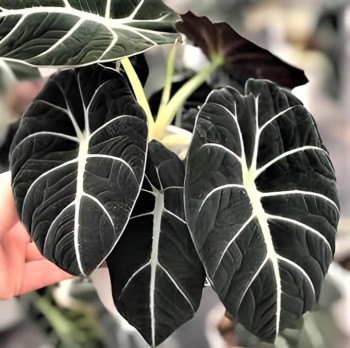
Alocasia 'Black Velvet' is a great option for a dramatic addition to your collection of houseplants. It is cultivated for its eye-catching foliage, which consists of velvety, deep green, nearly black leaves with silvery white veins. Because of its sluggish growth, this plant is ideal for terrariums. Alocasia 'Black Velvet' occasionally produces white blooms, but they are not very eye-catching; the foliage is what draws people in. Although Alocasia "Black Velvet" was once an uncommon houseplant, it is now more widely available.
Black Velvet Elephant Ear, Alocasia Black Velvet
Alocasia reginula A.Hay
Araceae
Herbaceous and Perennial
up to 1.5 feet in height
Thrives partial shade
Well-drained
Grows best in acidic to neutral soil
Blooms Very rarely
White
10+, USDA
Southeast Asia
How To Care Alocasia Black Velvet
The following are the primary maintenance needs for Alocasia Black Velvet: Plant in a container filled with loose soil that drains nicely. Thrives in warm, light, and humid environments. Once a week or so, give it a thorough watering and drain any extra liquid.
Light
Black Velvet grows best in dappled, bright, but indirect light, which is comparable to the circumstances found on a tropical forest floor, in contrast to certain larger Alocasia types that you may train to withstand full sun. As long as the morning light isn't too strong, a window facing east or north works nicely. The lush, dark leaf color won't flourish and straggly, lanky stems are frequently the result of insufficient light.
Soil
This plant needs even moisture to thrive, so choose a loose, well-drained potting media. Choosing a tropical mix with bark, sand, and loam is a good idea because root rot is a typical issue. Avoid those that include a lot of absorbent peat moss or coco coir.
Watering
Alocasia Black Velvet needs a balance between hydration and drainage to flourish in the steady dampness of its native tropical habitat. This plant has a modest resistance to drought and loves soil that is uniformly wet but not soggy. To keep its rich foliage, make sure Alocasia Black Velvet is watered once a week. Alocasia Black Velvet, which is generally grown indoors as an ornamental, benefits from increased humidity conditions that replicate its rainforest origins, encouraging vigorous growth and vivid leaf colors.
Temperature & Humidity
Alocasia Black Velvet requires high humidity and warmth to flourish, as would be expected for a tropical lowland plant. This plant does not like dry, air-conditioned spaces or drafty, chilly winter rooms. You may need to cultivate this little plant in a terrarium, especially in the winter, or spray and use a pebble tray or humidifier because they demand humidity levels well above 50%. Although they can withstand temperatures as low as 60 degrees Fahrenheit, they thrive in temps over 70 degrees.
Fertilizer
Different Alocasia species have different fertilization demands. While some species, particularly large ones, are heavy eaters, others are not so picky. Prior to planting, the soil should be treated with base fertilizer. To keep it healthy and growing quickly during the growing season, add a little amount of liquid fertilizer with each watering. When the temperature falls below 16 °C, fertilization can be completely halted or lowered gradually as the plants go into dormancy.
Pruning
This plant needs little trimming because of its velvety, black foliage. To encourage healthy development, concentrate on eliminating yellow or damaged leaves. Pruning should take place in early spring, when the plant is growing. To avoid infections, use clean, sharp instruments. Frequent trimming promotes new foliage and helps preserve its compact appearance. When trimming, keep an eye out for any indications of illness or pests. You may promote the plant's life and aesthetic appeal by doing these things.
Propagating
Alocasioa Black Velvet cannot be propagated by stem cuttings or leaves, and it is difficult and sluggish to develop from seed. However, rhizomes-horizontal subterranean stems-are how these plants spread. The plant has a tendency to create clumps because the rhizomes generate new upward-growing branches. Alocasia Black Velvet can be easily propagated by separating clumps or planting rhizome cuttings of established plants. Hold off until spring, once your plant has emerged from hibernation. Because alocasias can irritate the skin, wear gloves. To reveal the rhizomes, remove the plant from its pot and gently brush off the dirt surrounding the roots. Cut off several healthy-looking rhizome offshoot from the core stem using a clean knife. The cuttings should be kept in a warm, humid atmosphere and potted in a moist, well-drained potting mix. Hold off till the roots spread and establish themselves. The appearance of new growth often takes at least a few weeks. Additionally, the plants frequently generate individual corms, which are tiny subterranean plant stems that resemble bulbs and give rise to new plants. Because there isn't enough humidity in the soil, they don't usually spread properly. However, by putting these Alocasia corms in shallow water and covering them to provide the proper humidity conditions, you may extract them and multiply them.
From Seed
Another technique for cultivating Alocasia Black Velvet plants is seed propagation, however it takes more time and care. Compared to offset or division propagation, this approach is frequently slower and less dependable. Get seeds from a reputable supplier or gather seeds from an established Alocasia Black Velvet plant. To improve germination, take the seeds out of the berry and immerse them in distilled water for the entire night if the plant is ripe. Place the seeds in tiny seedling pots that are filled with a soil mixture that drains nicely. Cover the seeds with a thin coating of dirt and plant them at a shallow depth. Put the pots in a bright, indirect light source that is warm and humid. To keep the soil moist, wet it frequently, but don't overwater it since this might cause fungal issues. It may take several weeks or even months for seeds to germinate, so be patient. Transfer the seedlings into bigger pots with suitable growth material after they have a few genuine leaves. As you gradually acclimate the seedlings to conventional care circumstances, follow the Alocasia Black Velvet care requirements.
Potting & Repotting
Alocasia Black Velvet thrives in a somewhat rootbound environment. And, given their modest growth rate, you're unlikely to need to repot them more than once every few years or when you are planning to divide rhizomes.
Overwintering
Alocasia Black Velvet does not require overwintering because it is a houseplant. If you reside in a colder region, though, make sure the temperature stays above 60 degrees and give the plant more warmth.
How To Bloom
Blooms are a sign of a happy and mature plant thriving in ideal conditions. To get your Alocasia Black Velvet to bloom (flower), mimic its tropical needs: bright, indirect light, high humidity, consistently moist but not soggy, soil with good drainage (peat/perlite/bark mix), warm temperatures, and monthly optimal fertilizer during growing seasons.
Pests, diseases, and other problems
Spider mite infestations can affect Alocasia Black Velvet. Making sure the humidity levels are high enough can help keep the pests at bay, and your moisture-loving Alocasia will appreciate it. Spider mites like dry surroundings. In general, illnesses don't impact these plants. However, if the soil is not well drained and they are overwatered, plants may suffer root rot. Alocasia Black Velvet requires a warm, humid environment to thrive, but if you can supply it and are cautious with your watering plan, you should be rewarded with a striking display of leaves. Keep an eye out for the following to maintain your plant's health: Plants placed in direct sunlight typically have this issue. Try shifting to an area with more dappled light if you notice leaves crinkling at the margins. Be careful not to let your plant dry out too much. Yellowing leaves are frequently an indication that you need to reduce watering or switch to a better draining potting media since Alocasia Black Velvet cannot tolerate standing water. Brown leaf tips are one of the first indicators of inadequate watering, while overwatering is a more serious issue for these plants. Leaf tips can also be burned by excessive fertilizer.