Growing and Caring for Alocasia Frydek
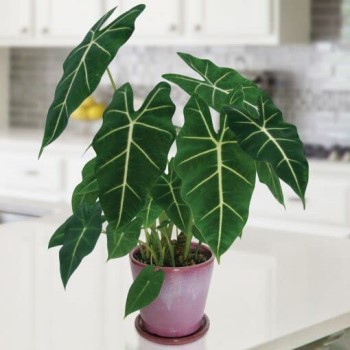
The gorgeous aroid Alocasia frydek has silky, dark green leaves with striking white veining. Although it grows outside in tropical locations, it is often planted inside. Alocasia frydek, like other Alocasia, can be difficult to maintain happy, but its foliage makes the effort worthwhile. These tropical aroids require wetness and high humidity in addition to warm temperatures, bright, indirect light, and an airy, acidic potting mix; otherwise, they would suffer in dry conditions and during protracted droughts. Be aware that this houseplant is poisonous to humans and animals, much as other Alocasia.
Elephant's ear, green velvet alocasia, and Alocasia frydek
Alocasia micholitziana 'Frydek'
Araceae
Perennial and herbaceous
2-3 feet broad and 2-3 feet tall
Thrives partial shade
Moist, yet well-drained
Prefers acidic soil
Blooms in Spring and summer
Green
9-11, USDA
Asia
How To Care Alocasia Frydek
When taking care of an alocasia frydek, keep the following points in mind: When the top inch of the soil is dry, give it a good watering. Alocasia frydek should be kept inside in bright, indirect light, away from direct sunlight that might damage its leaves. Plant alocasia frydek in a chunky blend, such as an aroid potting mix. Keep the humidity level near the plant high.
Light
They would want to have a plenty of bright indirect light. Like other plants, the Frydek is susceptible to sunburn, so it's critical to keep it out of the intense noon light. Therefore, it would be ideal to have a place adjacent to a window that faces north or east and receives less sunlight. Alternatively, it's also a good idea to be a few meters from a window that receives more sunlight.
Soil
An airy, rich, wet, but well-draining potting mix is ideal for the aroid Alocasia frydek. Steer clear of using indoor potting soil without extra nutrients since this may eventually compress and choke the roots of the plant. The best combination is one part potting soil, one part perlite, one part orchid bark, and one part compost or worm castings. Another option is to use a prepared aroid mix.
Watering
Maintain a constant level of moisture in the soil without making it soggy. When the top one to two inches of soil feel completely dry to the touch, water it. Make sure your pot has enough drainage because overwatering might cause root rot.
Temperature & Humidity
The optimal temperature range for Alocasia "Frydek" is between 65°F and 75°F (18°C and 24°C). Keep it away from heating vents and chilly drafts. Because of its tropical roots, this plant prefers high humidity. The moisture levels that the plant like may be maintained by regular misting, a pebble tray filled with water, or a humidifier close by.
Fertilizer
During the growth season, use a balanced liquid fertilizer that has been diluted to half strength every four to six weeks. When growth slows down in the winter, avoid fertilizing.
Pruning
Use a sharp, sterile cutting instrument, such as pruning shears, to remove any yellowed, brown, or damaged leaves. A green spadix may emerge from the heart of your healthy, happy alocasia frydek. It's a flower. When alocasia frydek is cultivated indoors, flowering is uncommon but can happen to mature plants. Many gardeners clip the flowers, cutting them off, so the plant may focus its efforts on producing new leaves because the flowers are unimpressive in comparison to the striking foliage of alocasia frydek. This isn't required, but you can do it if you want to.
Propagating
Like many Alocasia species, Alocasia "Frydek" is best propagated via division. In order to produce new plants, the plant's rhizomes, or subterranean stems, must be separated. Alocasia "Frydek" is best propagated in the spring or early summer, when the plant is starting to develop actively. As a result, the divisions have a greater opportunity to establish themselves prior to the winter months. To make sure the soil is wet and the plant is hydrated, water the plant the day before you intend to divide it. Take care not to harm the roots when you carefully remove the Alocasia "Frydek" from its container. Dig gently around the plant to remove it from the ground if it is grown outside. To make the rhizome and root structure visible, carefully remove as much dirt as you can from the area surrounding the roots. Examine the rhizome for any natural divisions. At least one growth point (node) and a few roots should be present in every division. To settle the dirt around the roots, softly water the recently planted divisions. Put them in an area that will get plenty of indirect light. Use a humidifier or set the pots on a tray of pebbles and water to raise the ambient moisture levels around the plants. Maintain a constant level of moisture in the soil without making it soggy. To encourage the growth of the young plants, keep the humidity high. Steer clear of direct sunlight to avoid burning your leaves.
From Seed
Although germination takes weeks, growing Alocasia Frydek from seed is feasible but difficult; fresh seeds, high humidity, warmth (70-85°F), strong indirect light, and patience are needed. However, growing from bulbs (corms) is sometimes simpler. Purchase seedlings, and be cautious of vendors offering readily counterfeit "Alocasia seeds" that sprout too rapidly. Fresh, cleansed seeds are sown in a well-draining mixture, constant moisture and heat are maintained, and single-leaf sprouts and roots are anticipated.
Potting & Repotting
Alocasia frydek only requires repotting every two to three years and like to be somewhat root-bound. The greatest time to repot a plant is in the spring or early summer, when it is not dormant. To avoid harming the plant's roots, put as much of the old potting mix as you can in a new pot that is one to two sizes larger.
Overwintering
Alocasia frequently becomes dormant throughout the winter and loses all of its leaves when cultivated inside. As the temperature drops, don't panic if your plant appears to have perished. If the bulb is still solid and alive, the plant will reappear in the spring. Keep in mind that when the plant is dormant, you don't need to fertilize it or give it much water. Water just when the soil has dried out on top. Resume routine watering as soon as a new leaf appears in the spring.
How To Bloom
While it can flower, forming a spadix surrounded by a pale spathe, the blooms are uncommon and not the major draw. The plant is planted largely for its beautiful leaves.
Pests, diseases, and other problems
Alocasia frydek, like many other kinds of Alocasia, may be difficult to maintain happy indoors. It can grow in the correct environment, but keep a look out for the following concerns: Alocasia are susceptible to unexpected environmental changes, which can cause drooping leaves. Light, temperature, humidity, and watering can all create drooping outer leaves that may eventually die. Your plant should perk back up once it has adjusted to its new surroundings, as long as it continues to receive the bare minimum of light, water, humidity, and warmth. When the alocasia frydek's growth environment changes abruptly, it may begin to lose part or all of its leaves. This is frequent in the fall and winter, when temperatures decrease and daylight hours get shorter. As the plant enters dormancy, it will shed all of its leaves and regrow them in the early spring. While this may be startling, as long as the bulb remains firm and alive, your frydek will recover. If you observe it shedding leaves in the spring or summer, assess its growth circumstances to find the cause. Is there a sudden shift in the environment? Is it receiving adequate light, water, and humidity? Identifying the source might help to prevent additional leaf loss. Yellow leaves are frequently caused by excessive or insufficient irrigation. Ensure that the plant's soil is evenly hydrated. Keep alocasia frydek in a container with drainage holes so that excess water may drain away from the roots.