Growing and Caring for Alocasia 'Regal Shields'
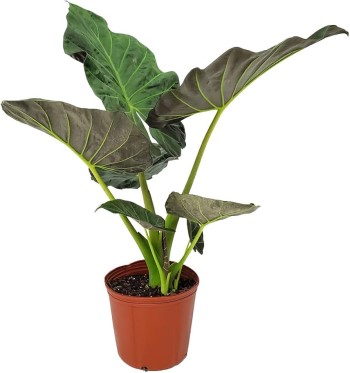
Alocasia 'Regal Shield' is an impressive hybrid that draws attention with its bold presence and lush tropical charm. Celebrated for its vigorous growth and sculptural shape, this striking plant showcases broad, glossy leaves in a deep, nearly black green, accented by a soft, velvety finish. Pale green to creamy white veins stand out sharply against the dark surface, while the leaf undersides feature a rich purplish-red tone that adds extra dimension. Held upright by strong, sturdy stems, its large, arrow-shaped leaves create a grand, regal silhouette, making Alocasia 'Regal Shield' a favorite for both indoor and outdoor settings.
Alocasia 'Regal Shields,' Elephant Ear 'Regal Shields'
Alocasia ordora x Alocasia reginula
Araceae
Perennial
Indoors, 1-3 feet tall with a spread of 1-2 feet, while outdoors, height of around 1-4 feet and expand to about 2-3 feet wide.
Thrives in full sun to partial shade
Loamy, Moist, yet well-drained
Grows best in acidic to neutral soil
Blooms in Spring and summer
White, green
9-11, USDA
Africa
How To Care Alocasia Regal Shields
Alocasia 'Regal Shields' is a tropical aroid that, like most alocasias, flourishes in warm conditions with steady moisture. To keep this hybrid healthy, place it where it receives plenty of bright, indirect light. Use a chunky, fast-draining potting mix enriched with organic material, and water consistently to keep the soil lightly moist without overdoing it. Maintain warm temperatures and higher humidity levels to support vigorous, lush growth.
Light
Alocasia 'Regal Shield' requires about 70-85% light each day but should never be exposed to direct sunlight. It performs well in soft, dappled light, and if grown outdoors, a 40% shade cloth is generally ideal. For indoor growth, you'll need a spacious spot due to its size, and it's best to keep the plant behind sheer curtains so it receives gently filtered light. Since this alocasia naturally leans toward its light source, rotate the pot weekly to encourage even, balanced growth.
Soil
Plant your Alocasia 'Regal Shields' in a well-draining potting mix that still holds a bit of moisture. This plant prefers consistently damp soil but cannot tolerate being waterlogged, so a loose, organic-rich medium is best. Aroid mixes work perfectly and are easy to create at home-combine equal parts coco coir, perlite, and orchid bark to form a moisture-retentive yet airy substrate that your Alocasia 'Regal Shields' will thrive in.
Watering
In the wild, alocasias are found throughout tropical and subtropical areas of Asia, especially in rainforests and along riverbanks where moisture is abundant. They enjoy steady soil dampness but are prone to root rot if the soil becomes waterlogged. The goal is to keep the soil consistently moist without it becoming saturated-similar to the feel of a lightly damp paper towel rather than a dripping wet cloth.
Temperature & Humidity
Alocasia 'Regal Shields' thrives in warm, humid environments, preferring temperatures between 65-80°F (18-27°C) and humidity levels above 50%. Since it cannot withstand frost, it can only be grown outdoors year-round in USDA zones 9-11. In cooler regions, it's best kept indoors or in movable containers that can be brought inside for overwintering.
Fertilizer
Alocasia 'Regal Shield' is a nutrient-demanding plant, and regular feeding is important-especially for mature specimens-if you want it to reach its full, lush size. Start by preparing a nutrient-rich soil blend using organic materials such as well-aged animal manure, high-quality sterile compost, or a balanced organic fertilizer. After planting, feed the plant monthly with a diluted liquid fertilizer, using only about one-third of the recommended strength.
Pruning
Pruning Alocasia 'Regal Shield' involves simply removing yellowing, damaged, or dead leaves to maintain the plant's health and appearance. Use clean, sharp shears to cut spent foliage at the base of the stem, which helps redirect the plant's energy toward new, vigorous growth. Regular light pruning keeps the plant looking tidy and encourages a fuller shape.
Propagating
Alocasia 'Regal Shield' is best propagated through division, separating the plant's offsets or rhizomes during repotting. Gently tease apart the clumps, ensuring each division has roots and at least one healthy growth point. Plant the sections in a well-draining aroid mix, keep the soil lightly moist, and provide warm, humid conditions to encourage successful establishment.
From Seed
Growing Alocasia 'Regal Shield' from seed is possible but slow and less common than division. Fresh seeds should be sown on the surface of a warm, moist, well-draining mix and lightly pressed in rather than buried. Maintain high humidity and steady warmth to encourage germination, which can take several weeks. Seed-grown plants take considerably longer to mature compared to propagated divisions.
Potting & Repotting
Repotting Alocasia 'Regal Shields' should be done every 1-2 years or when the plant outgrows its container, indicated by crowded roots or roots emerging from drainage holes. The best time to repot is in spring or early summer during active growth. Select a pot 2-4 inches larger in diameter, refresh the potting mix, and water thoroughly once repotting is complete.
Overwintering
Overwintering Alocasia 'Regal Shields' involves protecting the plant from cold and frost. In cooler climates, move it indoors or into a sheltered area before temperatures drop below 60°F (15°C). Reduce watering during the dormant period, maintain moderate humidity, and keep it in bright, indirect light to ensure it survives the winter and resumes healthy growth in spring.
How To Bloom
Alocasia 'Regal Shields' is mainly grown for its striking foliage, though mature plants can occasionally produce flowers. While the blooms are modest, they signal that the plant is thriving-though stressed plants may bloom too, so overall health is the true indicator. To encourage flowering, provide adequate light and consistent watering, keeping in mind that alocasias generally won't bloom until they are at least 2-3 years old. During flowering, foliage growth may slow, and some gardeners remove the blooms to redirect energy toward lush leaf development.
Pests, diseases, and other problems
Alocasias, including 'Regal Shields', are known for being high-maintenance and sensitive to their growing conditions. Common issues include yellowing or wilted leaves, which often result from insufficient light, water, or humidity. To prevent this, provide bright, indirect light, keep the soil evenly moist, and avoid placing the plant in dry or drafty areas. Spider mites can also cause yellowing and wilting, with fine webs signaling their presence-remove affected leaves, isolate the plant, and treat with an appropriate insecticide. Dry brown spots or leaf edges usually indicate low water or humidity, so ensure the plant doesn't dry out between waterings and avoid placing it near heating vents. Alternatively, if water and humidity are sufficient, brown spots may result from leaf burn caused by excessive light exposure.