Growing and Caring for Alocasia Silver Dragon
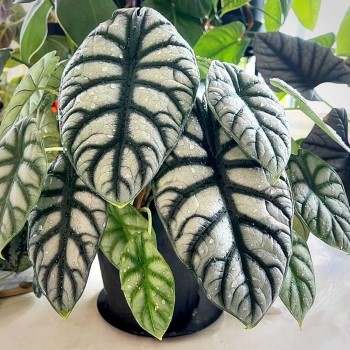
The eye-catching tropical plant Alocasia silver dragon is distinguished by its thick, velvety leaves in colors of silver and green. This plant needs high humidity, dappled light, and an airy, well-drained potting mix, such as orchid bark, to thrive, just like in its natural rainforest habitat. Like other forms of Alocasia, it is poisonous to humans and animals and becomes dormant if the temperature falls below 55 degrees Fahrenheit.
Alocasia silver dragon
Alocasia baginda 'Silver Dragon'
Araceae
Herbaceous and Perennial
up to three feet in height
Thrives partial shade
Well-drained
Thrives in neutral to alkaline soil
Blooms rarely, typically in spring and summer
White
9-11, USDA
Southeast Asia
How To Care Alocasia Silver Dragon
These are the fundamental maintenance needs for Alocasia silver dragon growth: Put the plant in direct, bright light. For balanced development, rotate the plant. Use soilless potting mix, such orchid bark, for your plants. When the top several inches of potting mix are dry, add water. Give this plant a high humidity level (over 50%). Maintain interior temperatures at or above 55 degrees Fahrenheit.
Light
Silver Dragon Alocasia retains its wonderful color and form when kept in bright, indirect light. This can involve positioning the plant either directly in front of a window facing north or east or somewhat away from a window facing south or west. Silver Dragon Alocasia should be kept out of direct sunlight to avoid scorching foliage. Too little light will cause the growth to become lanky and the leaves to lose their color. To maintain uniform growth and shape, rotate Silver Dragon Alocasia every few days.
Soil
For moisture retention without waterlogging, use a well-draining potting mix, such as coco coir mixed with bark or perlite. To replenish the soil and provide space for roots to grow, select a container with drainage holes and repot every one to two years in the spring.
Watering
The Silver Dragon loves slightly wet soil, which may be maintained by watering once a week during the summer and once every other week during the winter. Water your Silver Dragon just after the top 2 to 3 inches of soil has begun to dry up. Take care not to overwater it, since this might cause root problems or even death. Your Silver Dragon may begin to show brown, crispy leaf tips if there is insufficient moisture in the soil.
Temperature & Humidity
Avoid leaving your Alocasia silver dragon next to heaters or air conditioners that are blasting. High humidity is necessary for these plants to thrive. Although they like humidity levels between 60 and 80 percent, anything above 50 percent should be sufficient. Using a plant humidifier, putting these little plants in huge terrariums, and positioning them in the ideal area of your home-such as a warm bathroom-all contribute to creating the humid conditions that these plants prefer. Additionally, this tropical plant need constant warmth. The plant may go into dormancy if it is exposed to temperatures below 55 degrees Fahrenheit for an extended period of time.
Fertilizer
Because of its salt sensitivity, Silver Dragon Alocasia should be fertilized twice to four times each year using a high-quality, slow-release fertilizer. This plant can also benefit from natural fertilizers like compost and dung. Both of these forms of fertilizers will degrade over time, keeping the plant from becoming too fertilized, which may be detrimental.
Pruning
There are no difficult pruning requirements for the Alocasia silver dragon. Remove any leaves that appear sick or dead. Although they are uncommon, you may also wish to trim off any little spathe-like blossoms that emerge. This enables the energy to return to the more striking foliage.
Propagating
The division of rhizomes or clumps on adult plants that are at least a few years old is one way to propagate these plants, though it's not as easy as taking a stem cutting: Don't try propagation until your healthy, mature plant has emerged from hibernation in the spring. Alocasias include calcium oxalate crystals that irritate skin, thus always use gloves while handling the plants. Gently shake the dirt off the roots to reveal the rhizomes after carefully removing the plant from the pot. Cut out healthy rhizomes from the plant's primary stem using a sharp, sterile knife. Place the rhizome cuttings close to the top of a well-drained potting mix that is damp but not soggy. The cuttings should be kept in a warm, humid environment. A few weeks after the roots take root, new growth should emerge if the process is effective.
From Seed
Growing Alocasia Silver Dragon from seed is difficult, requiring hand pollination (because they are protogynous and require pollen from a different bloom/time) and patience, but it is more commonly propagated via its bulbs (corms) or rhizome division, which produces faster results with ample indirect light, well-draining soil, high humidity, and careful hydration to prevent root decay.
Potting & Repotting
You won't need to repot silver dragon too often because these plants can tolerate being somewhat rootbound. A good sign that repotting is necessary is when roots begin to emerge from the bottom of the pot drainage holes. It is typically sufficient to repot during the dormancy phase once every two or three years. Choose a pot that is about 1 or 2 inches bigger than the original. Because the soil in an overly big container retains too much moisture, it can lead to root rot. After repotting, give it a good watering.
Overwintering
You may either allow an Alocasia Silver Dragon to fall dormant as a corm or keep it actively growing indoors for the winter. Your interior environment and personal preferences will determine the optimal approach.
How To Bloom
Bright, indirect light, constant high humidity, moist but not soggy soil, balanced fertilizer during growth, and warm, draft-free temperatures are all necessary to encourage your Alocasia Silver Dragon to bloom, which is uncommon indoors but a sign of excellent health. These conditions mimic its tropical habitat and provide more energy for flowering, though you might think about cutting the bloom to redirect energy to leaf growth.
Pests, diseases, and other problems
Alocasia attracts humidity-loving bugs while not being prone to many illnesses. Infestations of spider mites are frequent. Frequent inspections enable you to apply insecticides early on before a serious issue arises. Alocasia plants are not necessarily the finest houseplants for beginners, therefore it's important to be aware of the following issues with these finicky plants. They often indicate that the terms you're providing your silver dragon need to be changed. The most frequent causes of curling leaves are underwatering and insufficient humidity. A steamy bathroom position, pebble trays loaded with water, or a humidifier will help keep your potting mix from drying out entirely. It might be challenging to get the proper moisture levels for this plant. Your plant may get root rot if you are overwatering it or if the potting mix has insufficient drainage. Yellowing leaves are an early indication of this. When your plant is dormant in the fall and winter, don't freak out if a few adult leaves fall off. However, your silver dragon may begin to shed healthy-looking leaves during the growth season if you're not providing your plant with that tropical jungle environment-dappled sunshine, even hydration, and lots of humidity.