Growing and Caring for Aloe Ferox
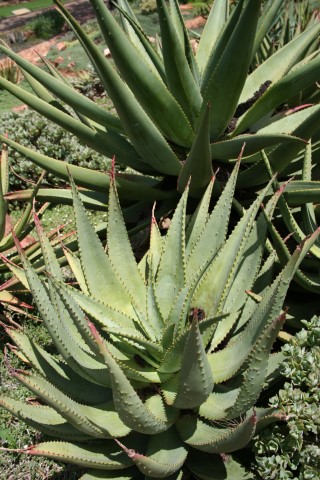
Native to South Africa, Aloe ferox (Cape Aloe) is a striking, evergreen succulent that forms a dense rosette of blue-green, lance-shaped leaves that can reach up to 3 ft (90 cm) long. The leaves feature dark brown spines along their edges and surfaces, particularly underneath, and older leaves dry in place, creating a characteristic "petticoat" around the stem. Usually growing on a single trunk, Cape Aloe sends up impressive candelabra-style flower stalks with 5-8 branches, each topped with long-lasting, bright red-orange tubular blooms and dark orange stamens that extend from the flower's opening. Highly adaptable, this aloe performs well in sunny garden beds or ornamental pots and is excellent for attracting nectar-loving birds. Nearly as well-known as Aloe vera, Aloe ferox is prized for its clear leaf gel and bitter brown sap, both widely used in cosmetics, herbal preparations, and oral or topical supplements.
Bitter aloe, Cape aloe
Aloe ferox
Asphodelaceae
Succulent and perennial
It typically grows 6-12 feet tall and spreads about 3-5 feet wide.
Thrives in full sun
Loamy, well-drained
Grows best in acidic to neutral soil
Blooms in Fall, winter, spring
Red, orange
9-12, USDA
Lesotho, South Africa
How To Care Aloe Ferox
Place Aloe ferox in a spot with plenty of direct sunlight. Use a loamy, fast-draining soil mix, and water only after the soil has fully dried. Feed it just once a year in the spring.
Light
Aloe ferox thrives with abundant direct sunlight. It's a hardy succulent that performs best outdoors year-round in warm climates and tolerates full sun with ease. However, in regions with extremely hot summers, it may benefit from some afternoon shade. When grown indoors, Aloe ferox should be placed near a bright south- or west-facing window where it can receive plenty of natural light.
Soil
Grow Aloe ferox in a sandy, well-draining loam. You can use a commercial cactus mix or improve regular houseplant soil by blending in one part perlite or coarse sand with two parts potting mix for better drainage.
Watering
The drought-resistant Aloe ferox prefers dry conditions. Allow the soil to dry out entirely before giving it a thorough watering. It's far better to water sparingly than too often, since consistently wet soil can cause root rot. Although the plant can endure long stretches without care, it will stay healthier and has a better chance of blooming when watered regularly.
Temperature & Humidity
Aloe ferox thrives in warm, moderate climates. It cannot handle temperatures below 25°F or extreme heat above 115°F. Since this species is naturally adapted to dry environments, it also tolerates typical indoor humidity levels without any trouble.
Fertilizer
Aloe ferox requires very little feeding to stay healthy, indoors or outside. For potted plants, apply a balanced liquid fertilizer at half strength in early spring.
Pruning
Aloe ferox generally doesn't need routine pruning. Its older, lower leaves naturally dry out and create a "skirt" beneath the healthy foliage. You can keep this skirt for a more natural look, or trim off the dead leaves at the base whenever they appear if you prefer a tidier plant.
Propagating
You can propagate Aloe ferox using stem cuttings taken from the tops of mature plants. To get started, you'll need a mature specimen, cactus soil, clean sterilized shears, and a small pot. Follow these steps: Cut the main stem a few inches below the lowest healthy leaves. Set the cutting aside in a warm, shaded area for several days so it can callus. Fill your pot with cactus mix and lightly moisten the soil. Insert the cutting so that a few inches of the stem sit below the soil surface. Place the pot in a warm, bright location, watering only after the soil dries completely and avoiding any disturbance. After a few months, gently tug the cutting to see if it has formed roots. Once it has rooted, resume regular Aloe ferox care.
From Seed
You can also grow Aloe ferox from seed, though seedlings may take several years before they begin to bloom. Sow the seeds in a gritty, fast-draining seed mix, placing them on the surface and lightly covering them so they stay in place. Keep the medium consistently moist but not wet to avoid rot. Once the seedlings reach about an inch in height-usually after around six months-you can transplant them into their own individual pots.
Potting & Repotting
Repot Aloe ferox every two to three years with fresh soil. If you notice roots poking through the drainage holes, crowded roots on the soil surface, or the plant's growth slowing down, it's time to move it to a new pot. Choose a container only one or two inches wider than the current one.
Overwintering
Aloe ferox handles cool weather fairly well, but it still needs protection during winter. Keep it in a bright spot with plenty of sun, reduce watering, and ensure the soil stays dry between waterings. If temperatures drop near freezing, move the plant indoors or to a sheltered area to prevent cold damage.
How To Bloom
To encourage Aloe ferox to bloom, give it as much bright, direct sunlight as possible, since strong light is essential for flower production. Use a well-draining soil mix and avoid overwatering-let the soil dry out between waterings. Keep the plant slightly cooler in winter with reduced watering, as this mild stress helps trigger blooming. Mature plants that have plenty of space, consistent light, and proper drainage are the most likely to produce their tall, striking flower spikes.
Pests, diseases, and other problems
Aloe ferox can attract typical aloe pests such as spider mites, fungus gnats, and gall mites, the latter causing distorted bumps on older leaves. Overwintering increases the risk of root or crown rot, leading to soft, mushy, or translucent leaves. Remove damaged leaves and repot the plant in a gritty, fast-draining mix, allowing the soil to dry fully before watering again. Dark leaf spots may signal aloe rust, a fungal infection; trim off affected areas, disinfect tools, discard infected material, and treat the plant with an organic fungicide. If the stem turns black or brown and becomes soft, root rot may be the cause, and the plant may need to be repotted to recover.