Growing and Caring for Althea Shrub (Rose of Sharon)
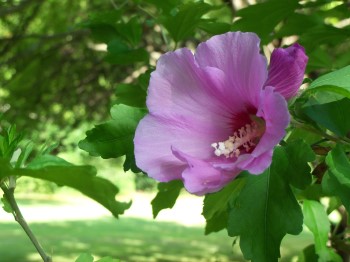
Rose of Sharon (Hibiscus syriacus) is a hardy hibiscus shrub valued for its vibrant summer-to-fall flowers and rich green leaves. It's low-maintenance, adapting well to poor soil, heat, and dry conditions. The plant can be trained into a tall, vase-like shape with several stems or pruned into a single-trunk form, and it typically has a lifespan of two to three decades.
Rose of Sharon, Syrian hibiscus, shrub althea, Syrian mallow, rose mallow
Hibiscus syriacus
Malvaceae
Shrub
It typically grows 8-12 feet tall and spreads 6-10 feet wide.
Thrives in full sun to partial shade
Moist, yet well-drained
Grows best in acidic to neutral soil
Blooms in Summer, fall
Pink, lavender, purple, blue, red, white; often with dark throats
5-8, USDA
Asia
How To Care Althea Shrub (Rose Of Sharon)
Plant rose of Sharon in spring or fall, spacing shrubs 6 to 10 feet apart in a sunny spot with fertile, well-draining soil. This hardy plant handles city environments, heat, humidity, poor soil, and even drought with ease. It's commonly grown as a focal point, hedge, or foundation shrub. Because it self-seeds freely, you may need to pull unwanted seedlings to prevent spread. Young plants require consistent watering and fertilizing to establish, while mature shrubs need water only during extended dry spells. Prune routinely to maintain your preferred shape.
Light
Rose of Sharon is a tough, adaptable shrub that performs best in full sun. Plenty of light encourages its showy double blooms-appearing in shades of pink, lavender, white, and more from midsummer into fall. For the best flowering, it should receive a minimum of six hours of direct sunlight each day. Although it can handle partial shade, limited light often leads to reduced blooming. For this hibiscus relative, choosing a planting spot with ample sun is key to supporting lush growth and abundant flowers.
Soil
Rose of Sharon grows well in any well-drained soil, whether it's nutrient-poor or rich and fertile. Still, adding compost or a slow-release fertilizer in early spring can boost overall vigor and encourage better blooming. While the plant tolerates dry conditions, keeping the soil slightly moist during droughts is helpful. Just be sure to avoid soggy conditions-this robust shrub prefers steady moisture but does not like having its roots waterlogged.
Watering
Watering rose of Sharon is straightforward but important. This durable shrub prefers well-drained soil to prevent root issues caused by excess moisture. Though it can handle dry periods, it blooms best when the soil is kept consistently moist, especially in midsummer as flowers form. During hot spells, give it a deep soak at the root level to fully hydrate the plant. Be careful to avoid waterlogging or letting the soil completely dry out-both can reduce flower production or cause yellowing leaves. Aim for soil that stays damp but never soggy.
Temperature & Humidity
Rose of Sharon tolerates both hot, dry summers and chilly winters, but it performs best in locations that offer full sun-about six or more hours of direct light each day. Although these shrubs are adaptable, they grow best with consistently moist soil, even though mature plants can withstand occasional drought. They also prefer moderate humidity but can manage just fine in drier environments.
Fertilizer
Rose of Sharon can make good use of fertilizer, but mature plants generally don't need it unless the soil lacks nutrients. If you choose to fertilize, apply a slow-release product in late winter or early spring according to the package directions. For an organic approach, mix one to two inches of compost into the soil around the base of the shrub in spring.
Pruning
Prune rose of Sharon in late winter or early spring before new growth begins to help maintain its shape and encourage more blooms. Remove any dead, damaged, or crossing branches, and thin out crowded stems to improve airflow. You can also shorten long shoots to keep the shrub compact or train it into a tree-like form. Regular pruning helps promote healthier growth and a tidier appearance.
Propagating
Rose of Sharon is easy to propagate, most commonly through softwood or semi-hardwood cuttings taken in late spring or early summer. Cut a healthy stem, remove the lower leaves, and root it in moist soil or water until new roots form. Once established, the young plant can be potted up or moved into the garden.
From Seed
Rose of Sharon self-seeds easily, and you can also grow it from collected seeds. Start seeds indoors about 12 weeks before your last expected spring frost. Use a soilless potting mix, planting each seed about 1/2 inch deep, and mist the soil to keep it lightly moist. Place the container in bright light at 75-80°F, and keep the mix consistently damp. Seedlings typically germinate within 2 to 4 weeks.
Potting & Repotting
When potting or repotting rose of Sharon, do so in warm weather-preferably in spring or fall. Select a container just 1-3 inches larger than the root ball to avoid excessive soil. Use a well-draining pot with quality potting mix, as the shrub dislikes soggy roots. As it grows, either move it to a slightly larger pot or prune the roots to maintain healthy growth.
Overwintering
To overwinter rose of Sharon, place it in a sheltered spot protected from strong winds and extreme cold. In colder regions, apply a layer of mulch around the base to insulate the roots and help the shrub survive the winter months.
How To Bloom
To encourage rose of Sharon to bloom, plant it in full sun with at least six hours of direct sunlight daily. Ensure the soil is well-drained and moderately fertile, and water consistently without overwatering. Light pruning in late winter or early spring helps promote new growth and more flowers. Fertilize lightly in early spring with a balanced or slow-release fertilizer, and remove any dead or weak branches to allow the shrub to focus energy on producing vibrant blooms.
Pests, diseases, and other problems
The main pest threat to rose of Sharon is the Japanese beetle. These beetles are relatively easy to manage because their large size makes them easy to spot before they cause significant damage. The simplest control method is to pick or shake them off the plant into a container of soapy water, which suffocates them by coating their bodies. While rose of Sharon is generally hardy, poor growing conditions can lead to problems. Overwintering often causes yellowing leaves, so ensure the shrub is planted in well-drained soil and avoid waterlogged areas. Leaf or flower bud drop is usually a sign of stress from too much or too little moisture. Browning or wilted leaves may also result from stress, poor drainage, or recent repotting-pruning damaged leaves can help the plant recover. Adequate sunlight is essential, as too much shade can reduce growth and limit flowering.