Growing and Caring for Amaranth
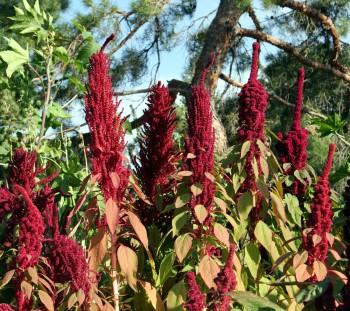
Amaranthus is a short-lived, frost-sensitive plant valued for both its ornamental beauty and edible qualities. Popular in summer bedding, it produces dramatic, showy tassel-like flowers in crimson, purple, or green, or features brightly colored foliage. Among its many varieties, the flowering type 'Love Lies Bleeding' is well-known, while edible forms are called amaranth, Caribbean spinach, Inca wheat, Chinese amaranth, callaloo, tampala, or Chinese spinach. Both the leaves and seeds are highly nutritious: the leaves are rich in vitamin C and iron with a spinach-like taste, and the gluten-free seeds are high in protein and calcium with a nutty flavor.
Amaranth, amaranthus, pigweed, love lies bleeding, tassel flower
Amaranthus spp.
Amaranthaceae
Annual
Amaranthus typically grows 2-4 feet tall and 1-2 feet wide.
Thrives in full sun to partial shade
Moist, yet well-drained
Grows best in acidic to neutral soil
Blooms in summer and fall
Red
2-11, USDA
North America, South America
How To Care Amaranth
Key care tips for growing amaranth include planting in well-drained, slightly acidic soil with good air circulation. Choose a location that receives at least six hours of direct sunlight daily. Water consistently but avoid waterlogged conditions, and supplemental fertilizer is generally not needed.
Light
Amaranth thrives in full sun, especially in northern regions, but in warmer southern climates, it benefits from some afternoon shade. Aim to plant it in a spot that receives at least six hours of sunlight daily.
Soil
Amaranth grows well in average soils and can tolerate poor soil conditions. Extremely rich soils may reduce flowering and seed production, while dense clay soils are generally unsuitable for the plant.
Watering
Amaranth requires moderate watering, typically about 1 inch per week. Avoid overwatering to prevent root rot and fungal issues.
Temperature & Humidity
Amaranth thrives in warm conditions and is heat-tolerant, unlike many leafy greens. Native to the southern United States and Mexico, it grows best in temperatures between 70°F and 85°F.
Fertilizer
Amaranth generally doesn't need additional fertilization. Excess nitrogen, commonly found in fertilizers, can make the plants grow leggy and reduce their suitability for harvesting.
Pruning
Amaranth requires minimal pruning. You can remove damaged or yellowing leaves to keep the plant looking tidy, and pinch back the growing tips early in the season to encourage bushier growth and more flowers. For ornamental varieties, trimming spent flower heads can also help maintain a neat appearance.
Propagating
Amaranth is easily propagated from seed. Sow seeds directly in well-draining soil after the last frost, or start them indoors 4-6 weeks before transplanting. Lightly press the tiny seeds onto the soil surface without covering them, as they need light to germinate. Keep the soil consistently moist, and seedlings typically emerge within 5-14 days.
From Seed
Amaranth is easily grown from seed. Sow seeds in well-draining soil after the last frost or start indoors 4-6 weeks earlier. Lightly press seeds onto the soil surface without covering, keep the soil moist, and seedlings usually emerge within 5-14 days.
Potting & Repotting
Amaranth can be grown in containers or hanging baskets, though some varieties grow large with long roots, so bigger pots (10 gallons or more) are ideal. As an annual, it typically only needs one growing container unless moving from a seedling pot. Use well-draining potting soil and ensure the container has plenty of drainage holes.
Overwintering
Amaranth is a frost-tender annual and cannot survive freezing temperatures. In colder regions, it must be replanted each year, as it does not overwinter outdoors. In mild climates, seeds may self-sow, providing new plants the following season.
How To Bloom
Amaranth blooms reliably from midsummer, usually starting in July, until the first frost. Its striking, drooping clusters of red flowers have a mild, grassy scent and can be enjoyed as cut flowers or dried by cutting the stalks and placing them in a paper bag. Deadheading spent blooms encourages more flowers, prevents unwanted self-seeding, and helps the plant focus energy on producing additional blooms. Ensure the plant receives sufficient sunlight for optimal flowering.
Pests, diseases, and other problems
Amaranth is heat- and drought-tolerant and generally easy to grow. Browning leaves are usually caused by overwatering, as underwatering is rarely an issue. Birds are attracted to the seeds and may damage flowers, so using netting can help protect them-but keep in mind that netting may also limit access for pollinators.