Growing and Caring for American Ginseng
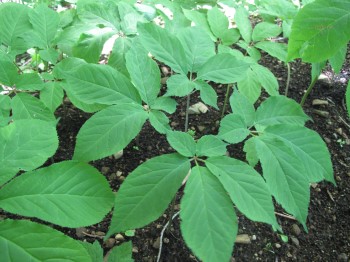
Ginseng is a plant in the Panax genus, prized for its fleshy roots and long-standing use in traditional medicine. Most species are native to East Asia, with two species found in North America. The plant has a single stem with palmate, serrated green leaves, and produces small, fragrant, umbel-shaped white or greenish flowers in spring or summer, followed by bright red berries. Ginseng is typically planted in fall or early winter and grows very slowly; whether started from seed or root, it takes four to seven years for the roots to reach harvestable size.
Ginseng
Panax spp.
Araliaceae
Perennial and herb
Grows 8-24 inches tall and 8-12 inches wide
Thrives in partial sun to full shade
Moist, yet well-drained
Prefers acidic soil
Blooms from late May to July
Greenish-white
3-7, USDA
Asia, North America
How To Care American Ginseng
American ginseng thrives in shaded areas with rich, well-draining, slightly acidic soil. Keep the soil consistently moist but avoid waterlogging, and mulch with leaves to retain moisture and regulate temperature. Plant seeds or roots in fall or early winter, and be patient-this slow-growing plant takes 4-7 years to produce harvestable roots. Avoid disturbing the soil unnecessarily to ensure healthy growth, flowering, and root development.
Light
American ginseng grows best in partial to full shade, mimicking its natural woodland environment.
Soil
American ginseng grows best in moist, well-draining, slightly acidic soil with a pH of 5.0 to 6.5, enriched with plenty of organic matter and leaf litter. Good drainage is essential, as flooded areas are unsuitable, and the plant will not thrive in heavy, compacted, or clay soils.
Watering
Ginseng thrives in naturally moist soil and typically does not require additional watering, except during dry periods when supplemental moisture may be needed.
Temperature & Humidity
American ginseng prefers cool, temperate climates with moderate humidity. It grows best in shaded woodland conditions, avoiding hot, dry environments, and thrives in regions with cold winters that help simulate its natural dormancy period.
Fertilizer
When grown in rich, fertile soil with abundant leaf litter, American ginseng does not require additional fertilizer; in fact, using commercial fertilizers can negatively affect its growth.
Pruning
Pruning American ginseng is minimal. Remove any dead, damaged, or diseased stems during the growing season to maintain plant health. Avoid heavy cutting, as the plant is slow-growing and relies on its leaves to store energy for root development and future blooms.
Propagating
American ginseng is typically propagated from seeds, which require a cold stratification period to break dormancy. Collect fully ripe seeds in the fall, clean them, and stratify them in a moist, cold environment for several months. After stratification, sow the seeds in well-draining, fertile soil with leaf litter, keeping them shaded and moist. While propagation from root divisions is possible, it is less common due to the plant's slow growth and delicate roots.
From Seed
To grow American ginseng from seed, start by collecting fully ripe seeds in the fall and cleaning them thoroughly. Cold-stratify the seeds for several months by keeping them in a moist, cool environment to break dormancy. After stratification, plant the seeds in well-draining, fertile soil enriched with leaf litter, and place them in a shaded area that mimics a woodland environment. Keep the soil consistently moist but not waterlogged. Germination may take several months, and seedlings should be left undisturbed to grow slowly, as ginseng typically takes 4-7 years to reach harvestable roots.
Potting & Repotting
When growing American ginseng in containers, use a deep pot with good drainage filled with rich, well-draining, slightly acidic soil and plenty of organic matter or leaf litter. Plant seeds or roots at the same depth they were in their natural environment, and keep the soil consistently moist. Place the container in a shaded area that mimics woodland conditions. Repot only when necessary, as ginseng grows slowly and does not respond well to frequent disturbance. Carefully lift the plant, keeping the roots intact, and replant in fresh, well-draining soil with the same planting depth. Water lightly after repotting and maintain consistent shade and moisture to help the plant re-establish.
Overwintering
American ginseng requires minimal overwintering care. As a deciduous perennial, it naturally goes dormant in winter. Ensure the plant is mulched with leaf litter or other organic material to protect its shallow roots from freezing temperatures. Avoid disturbing the soil, and check occasionally for any damage from animals. In spring, remove old mulch and any dead or damaged stems to encourage healthy new growth.
How To Bloom
American ginseng blooms naturally when grown under healthy, woodland-like conditions. Ensure the plant receives partial to full shade, consistently moist, well-draining, slightly acidic soil, and rich organic matter. Avoid disturbing the roots and provide leaf mulch to retain moisture and nutrients. Healthy, established plants will typically produce small, greenish-white flowers in late spring to early summer, which later develop into bright red berries if pollinated.
Pests, diseases, and other problems
American ginseng is relatively pest-free but can be affected by slugs, deer, and other animals that feed on its foliage, as well as root-knot nematodes. It is also susceptible to fungal diseases, including Alternaria leaf blight, gray mold, anthracnose, and root rot. To prevent root rot, ensure the soil is well-draining and avoid overwatering. Remove any infected plants promptly to help prevent the spread of disease.