Growing and Caring for Anise Hyssop
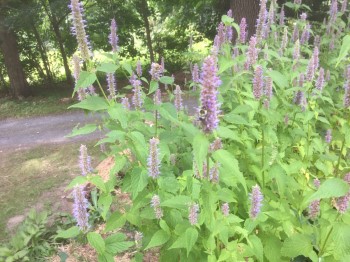
Anise hyssop is a hardy, aromatic perennial herb in the mint family (Lamiaceae), valued for both its ornamental appeal and culinary uses. It forms upright clumps of square stems lined with soft, ovate green leaves that release a sweet licorice or anise fragrance when crushed. From early to late summer, tall spikes of tiny, tubular flowers rise above the foliage, typically in shades of lavender to violet, though some cultivars bloom in pink or white. The nectar-rich flowers are highly attractive to bees, butterflies, and hummingbirds, making anise hyssop an excellent choice for pollinator gardens. The leaves and flowers are edible and commonly used in herbal teas, desserts, and as a fresh garnish. Adaptable and drought-tolerant once established, anise hyssop thrives in full sun and well-drained soil, returning reliably each year with minimal care.
Hyssop, blue giant hyssop, lavender giant hyssop
Agastache foeniculum
Lamiaceae
Herbaceous, perennial
Grows to about 2 to 4 feet in height and spreads roughly 1 to 3 feet wide.
Thrives in full sun
Moist, yet well-draining, sandy
Prefers Neutral soil
Blooms in Summer, fall
Blue, Purple
3-8, USDA
North America
How To Care Anise Hyssop
Anise hyssop is easy to care for and thrives with minimal attention. Grow it in full sun for the strongest growth and most abundant flowering, though it can tolerate light shade. Plant it in well-drained soil, as overly wet conditions can lead to root problems. Water regularly while the plant is becoming established, then reduce watering, as mature plants are fairly drought-tolerant. Fertilizer is rarely needed; a light application of compost in spring is usually enough. Remove spent flowers to encourage continued blooming, and cut the plant back in late fall or early spring to promote healthy new growth.
Light
Anise hyssop grows best in full sun. While it can tolerate partial shade, insufficient sunlight often causes the plant to become tall and leggy with fewer blooms.
Soil
Anise hyssop performs best in fertile, well-drained soil. Avoid heavy or compacted soils, as they can hinder root establishment and increase the risk of root rot. The soil pH should be close to neutral; if it is overly acidic, amending it with lime can help create more suitable growing conditions.
Watering
Water newly planted anise hyssop once a week during the first four weeks if there is no rainfall, applying water slowly and deeply to encourage strong, spreading roots. After the plants are established, regular watering is no longer necessary, as this perennial is drought-tolerant.
Temperature & Humidity
Anise hyssop thrives in moderate to warm temperatures and is well adapted to a wide range of climates. It grows best in temperatures between 18-30°C (65-85°F) but is quite cold-hardy and can tolerate winter temperatures well below freezing once established. Humidity is generally not a concern, as anise hyssop tolerates both dry and moderately humid conditions. However, good air circulation is important, especially in humid climates, to prevent fungal issues. Well-drained soil and avoiding overcrowding will help the plant stay healthy in varying humidity levels.
Fertilizer
Feed anise hyssop in early spring every other year by spreading organic compost around the base of the plant. Aim the compost toward the root zone and keep a couple of inches of space between it and the main stem. An all-purpose fertilizer may also be used if needed.
Pruning
Anise hyssop is a low-maintenance plant that requires little care once established. Light, occasional pruning helps promote blooming and keeps the plant neat. The best time to prune is early spring, using clean, sharp shears. Cut back up to one-third of the plant to encourage fuller, bushier growth, and remove any dead material just above a healthy bud node.
Propagating
Anise hyssop is easy to propagate and can be multiplied by seed, division, or stem cuttings. Seeds can be sown directly outdoors in spring after the danger of frost has passed, or started indoors a few weeks earlier; they germinate readily with light and warmth. Established plants can be divided in early spring or fall by digging up the clump and separating it into smaller sections, each with healthy roots and shoots. Softwood stem cuttings taken in late spring or early summer also root well when placed in moist, well-draining soil and kept slightly humid until new growth appears.
From Seed
Anise hyssop is easy to grow from seed and often self-sows once established. Seeds can be started indoors 6-8 weeks before the last frost or sown directly outdoors in spring after frost danger has passed. Press the seeds lightly onto the soil surface, as they need light to germinate, and keep the soil consistently moist but not soggy. Germination usually occurs within 7-14 days in warm conditions. Once seedlings are large enough to handle, thin or transplant them to a sunny location with well-draining soil, spacing plants about 12-18 inches apart.
Potting & Repotting
Anise hyssop grows well in containers when given proper potting and occasional repotting. Choose a pot with good drainage holes and use a loose, well-draining potting mix, ideally amended with compost. Place the plant in full sun and water when the top inch of soil feels dry. Repot anise hyssop in early spring when roots become crowded or begin to circle the pot, selecting a container one size larger. Gently loosen the root ball, set the plant at the same depth as before, and water thoroughly to help it settle and resume healthy growth.
Overwintering
Anise hyssop is a cold-hardy perennial and usually survives winter outdoors with minimal care. In late fall, after flowering has finished, stems can be cut back to a few inches above the ground, or left standing to protect the crown and provide winter interest. Applying a light layer of mulch around the base helps insulate the roots and regulate soil temperature. Container-grown plants should be moved to a sheltered location or protected with mulch and insulation to prevent the roots from freezing solid.
How To Bloom
To encourage abundant blooming in anise hyssop, plant it in full sun, as at least 6-8 hours of direct light is essential for strong flower production. Grow it in well-draining soil and avoid excessive fertilization, since too much nitrogen promotes leafy growth at the expense of blooms. Water regularly during establishment, then moderately once the plant is mature. Deadhead spent flower spikes and lightly prune the plant in early spring to encourage bushier growth and more flowering stems throughout the season.
Pests, diseases, and other problems
Anise hyssop is generally a hardy and low-maintenance plant, but it can occasionally face some issues. Common pests include aphids, spider mites, and whiteflies, which may cause distorted leaves or a sticky residue. While largely disease-resistant, anise hyssop can sometimes develop powdery mildew in humid or poorly ventilated conditions, and root rot may occur if the soil remains waterlogged. Other problems may include wilting due to drought stress or nutrient deficiencies that stunt growth and reduce flowering. Regular pruning, proper spacing for airflow, and well-draining soil help prevent most of these issues.