Growing and Caring for Annabelle Hydrangea
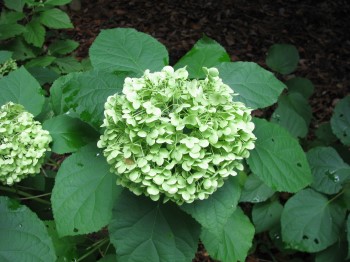
Annabelle Hydrangea (Hydrangea arborescens 'Annabelle') is a popular deciduous shrub known for its stunning, large, round clusters of pure white flowers. Blooming in early to mid-summer, the flower heads can reach up to 12 inches (30 cm) in diameter, creating a dramatic, snowball-like effect in gardens or landscapes. The blooms often start bright white and may turn pale green as they age. Annabelle Hydrangea typically grows 3-5 feet (0.9-1.5 m) tall and wide, with lush, deep green foliage that provides an attractive backdrop to the flowers. This hydrangea is highly valued for its hardiness, vigorous growth, and ability to thrive in a variety of soil types, preferring moist, well-drained soil and partial to full sun. It's also deer-resistant and can be easily shaped through pruning, making it a favorite for borders, hedges, or as a specimen plant in ornamental gardens.
Annabelle hydrangea, Smooth hydrangea
Hydrangea arborescens 'Annabelle'
Hydrangeaceae
Deciduous flowering shrub
Reaches 3-5ft in height and 4-6ft in width.
Thrives in full sun to partial shade
Moist, yet well-drained
Prefers acidic soil
Blooms in June to September
White
3-8, USDA
Eastern and central North America
How To Care Annabelle Hydrangea
Annabelle Hydrangea thrives in full sun to partial shade, with some afternoon shade in hotter climates to protect its leaves. It prefers moist, well-drained soil rich in organic matter and benefits from consistent watering, especially during dry periods. Mulching helps retain moisture and keeps roots cool. Fertilize in early spring with a balanced fertilizer, and prune in late winter or early spring by cutting stems back to about 12-18 inches to encourage strong, large blooms. Generally hardy and disease-resistant, it may occasionally encounter pests like aphids or issues such as powdery mildew, which can be minimized with proper spacing and airflow.
Light
Plant Annabelle Hydrangea in a spot that gets morning sun and afternoon shade. It can handle full sun only if the soil stays consistently moist, and while it can grow in full shade, flowering may be reduced without some sunlight.
Soil
Annabelle Hydrangea grows best in moist, well-drained soil rich in organic matter. It adapts to a variety of soil types, including clay, loam, or sandy soils, and prefers a slightly acidic pH of 5.5 to 6.5. Consistent moisture is important, as the plant does not tolerate prolonged dryness. Mulching can help retain soil moisture and keep roots cool.
Watering
Annabelle Hydrangea is not drought-tolerant and requires regular watering to keep the soil consistently moist. In hot, dry conditions, its leaves and flowers may suffer, and in southern regions, watering may be needed up to three times a week.
Temperature & Humidity
Annabelle Hydrangea is cold-hardy in USDA zones 3-9, tolerating winter temperatures down to about -30°F (-34°C). It prefers moderate summer temperatures and does best in environments with consistent moisture and humidity. Extremely hot, dry conditions can stress the plant, causing leaves to wilt and flowers to decline, so supplemental watering and mulch are recommended in such climates.
Fertilizer
Annabelle Hydrangea benefits from balanced, slow-release fertilizers applied in early spring as new growth begins. A fertilizer with an N-P-K ratio around 10-10-10 or 14-14-14 works well. If the plant shows slow growth or pale leaves, a second light feeding in mid-summer can help boost blooms. Avoid over-fertilizing, as this may encourage leaf growth at the expense of flowers. Incorporating compost or organic matter into the soil also supports healthy growth and flowering.
Pruning
Annabelle Hydrangea blooms on new wood, so avoid pruning during the emergence of new spring growth. In autumn, faded flowers can be removed or left for winter interest. Pruning is best done in late winter, removing any damaged or diseased branches. The shrub can also be cut back to the ground in winter or at the end of the growing season, but keep a few old stems to support new growth and the large, heavy flowerheads.
Propagating
Annabelle Hydrangea can be propagated through softwood or hardwood cuttings. Softwood cuttings are taken in late spring to early summer from new, flexible growth, while hardwood cuttings are best taken in late fall or winter from mature stems. Cut a 4-6 inch section just below a leaf node, remove the lower leaves, and dip the cut end in rooting hormone. Plant it in moist, well-draining soil or a propagation mix, keep it in indirect light, and maintain consistent moisture until roots develop, usually within a few weeks. Once established, transplant the new plant into the garden or a larger container.
From Seed
Annabelle Hydrangea can be grown from seed, though it is slow and less common than propagation from cuttings. To start, collect fresh seeds from dried flower heads in late summer or fall. Sow the seeds in a moist, well-draining seed-starting mix and lightly cover them with soil. Keep the soil consistently damp and in a warm, bright location, but avoid direct sunlight. Germination can take several weeks, and seedlings should be transplanted carefully once they are strong enough to handle. Growing from seed may take a few years before the plant reaches flowering size.
Potting & Repotting
Choose a large container with good drainage to accommodate the shrub's root system. Use a rich, well-draining potting mix amended with compost. Plant the hydrangea at the same depth it was growing in its previous container or in the ground. Water thoroughly after planting and keep the soil consistently moist. Repot every 2-3 years or when the plant outgrows its container. Choose a slightly larger pot and gently loosen the root ball, trimming any dead or crowded roots. Refresh the soil with a nutrient-rich mix. After repotting, water thoroughly and provide partial shade for a few days to reduce transplant stress.
Overwintering
Since Annabelle Hydrangea blooms on new wood, only its roots require protection from winter temperatures below 30°F. Apply a 3-inch layer of mulch, such as wood chips or pine straw, and add more in the fall if necessary. Mulching also helps retain soil moisture throughout the season.
How To Bloom
Annabelle Hydrangea blooms on new wood, so proper pruning is key. Prune in late winter or early spring, cutting back stems to about 12-18 inches to promote strong, healthy growth. Ensure the plant receives morning sun and afternoon shade, and keep the soil consistently moist and rich in nutrients. Fertilize in early spring with a balanced fertilizer and consider a light feeding in mid-summer if growth is slow. Adequate water, good air circulation, and full to partial sun exposure will help the shrub produce large, vibrant white flowerheads throughout the summer.
Pests, diseases, and other problems
Annabelle Hydrangea is generally hardy and low-maintenance but can occasionally face issues. Common pests include aphids, spider mites, and scale insects, which may cause leaf distortion or discoloration. It is also susceptible to powdery mildew, leaf spots, and root rot if grown in poorly drained or overly wet soil. Other common problems include wilting or leaf scorch in hot, dry conditions and reduced flowering due to insufficient sunlight or improper pruning. Regular watering, good air circulation, and proper pruning help prevent most of these issues and keep the plant healthy.