Growing and Caring for Anthurium
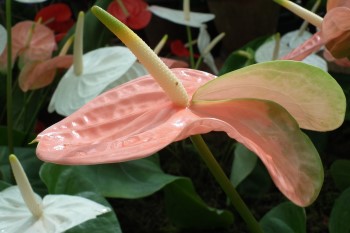
Anthurium is a popular tropical ornamental plant prized for its glossy foliage and long-lasting, brightly colored blooms. The plant is best known for its heart-shaped, waxy spathes, which are often red, pink, white, or green, surrounding a slender, finger-like spadix where the true flowers grow. Anthurium leaves are typically large, leathery, and deep green, adding to the plant's bold, elegant appearance. Native to the rainforests of Central and South America, anthuriums thrive in warm, humid conditions with bright, indirect light, making them excellent choices for indoor decoration as well as shaded outdoor gardens in tropical climates.
Anthurium, tailflower, laceleaf, flamingo flower
Anthurium spp.
Araceae
Herbaceous, perennial
Grows about 12-18 inches tall with a spread of 9-12 inches.
Thrives partial shade
Prefers well-draining soil
Prefers acidic soil
Blooms in Spring, summer, fall, winter
Red, white, pink
11-12, USDA
Central America, South America, Caribbean
How To Care Anthurium
Anthurium care is relatively simple when its tropical needs are met. Grow the plant in bright, indirect light, as direct sun can scorch the leaves. Use a well-draining, airy potting mix and water when the top inch of soil feels dry, keeping the soil slightly moist but never soggy. Anthuriums prefer warm temperatures, high humidity, and good air circulation, so misting or placing the plant near a humidifier can be helpful. Feed with a balanced, diluted fertilizer every few weeks during the growing season, and remove yellow or damaged leaves to keep the plant healthy and attractive.
Light
Anthuriums grow best in bright light rather than deep shade, but direct sun can burn their leaves. Too little light results in weak growth and reduced flowering. An ideal spot provides about six hours of bright, indirect sunlight each day.
Soil
Anthurium grows best in a loose, airy, and well-draining soil that allows plenty of air to reach the roots. A mix similar to orchid media works well, such as a blend of orchid bark, peat moss or coco coir, and perlite. The soil should retain some moisture but never become compacted or waterlogged. Adding materials like sphagnum moss or coarse sand helps improve drainage and root aeration, creating ideal conditions for healthy growth.
Watering
Keep the soil slightly moist at all times, but never let it dry out completely. For indoor plants, water about once a week or when the top layer of soil feels dry. Water thoroughly until excess moisture drains from the pot, but do not allow the plant to sit in standing water, as anthuriums are prone to root rot. When grown outdoors, they may require watering every two to three days depending on weather conditions.
Temperature & Humidity
Anthuriums thrive in warm, stable temperatures between 65-85°F (18-29°C) and should be protected from cold drafts or temperatures below 60°F (16°C). They prefer high humidity, ideally 60-80%, which mimics their natural tropical environment. To maintain proper humidity indoors, mist the plant regularly, use a humidity tray, or place it near a humidifier.
Fertilizer
Anthuriums benefit from regular, light feeding during their active growing season. Use a balanced, water-soluble fertilizer or one slightly higher in phosphorus to encourage blooming, diluted to 1/4-1/2 strength. Apply every 4-6 weeks in spring and summer. Avoid overfertilizing, as excess salts can damage the roots; flush the soil occasionally with plain water. Reduce or stop feeding during fall and winter when growth slows.
Pruning
Remove older leaves and spent flowers as they fade by pinching them off at the base or cutting them with clean, sterile pruners. You can prune anthurium at any time of year to shape the plant by removing overly tall stems or those growing at awkward angles. Always keep at least three to four healthy leaves on the plant. Damaged leaves may be trimmed by cutting away only the affected areas; if the plant has few leaves, it's best to leave a partial leaf until new growth appears.
Propagating
Anthurium is most easily propagated by division. Gently remove the plant from its pot and separate healthy sections of the root ball, making sure each division has roots and at least one or two leaves. Plant each section in a well-draining, airy potting mix and water lightly. Keep the new plants in warm conditions with bright, indirect light and high humidity until they establish. Anthuriums can also be propagated from stem cuttings with aerial roots, but division is the quickest and most reliable method.
From Seed
Growing anthurium from seed is possible but slow and requires patience. Fresh seeds give the best results and should be sown soon after harvesting, as they lose viability quickly. Clean the seeds and sow them on the surface of a moist, well-draining medium such as sphagnum moss or a peat-perlite mix, lightly pressing them in without covering. Keep the medium warm, humid, and evenly moist, with temperatures around 75-85°F (24-29°C) and bright, indirect light. Germination may take several weeks, and seedlings grow slowly, often taking 2-3 years to reach flowering size.
Potting & Repotting
Anthurium prefers to be slightly root-bound but benefits from repotting every 2-3 years or when roots begin to crowd the pot or grow out of the drainage holes. Choose a container just one size larger with good drainage. Use a loose, well-draining, airy potting mix such as an orchid-based blend with bark, peat or coco coir, and perlite. When repotting, gently loosen the roots, remove any damaged or rotting sections, and set the plant at the same depth as before. Water lightly after repotting and keep the plant in bright, indirect light with high humidity to help it recover.
Overwintering
To overwinter anthurium, keep it in a warm, frost-free environment, ideally between 65-75°F (18-24°C). Reduce watering, allowing the top inch of soil to dry between waterings, and stop fertilizing until active growth resumes in spring. Place the plant in bright, indirect light and maintain high humidity by misting or using a humidifier. Remove any dead or yellowing leaves, and avoid exposing the plant to cold drafts or sudden temperature changes during the winter months.
How To Bloom
Anthuriums are somewhat demanding, but their striking flowers make the effort worthwhile. When grown indoors under ideal conditions, they can bloom year-round, with each flower lasting 2-3 months. What appear as flowers are actually modified leaves called spathes, which sit atop a single spike emerging from the central stem. Each spathe surrounds a pencil-like spadix, where tiny true flowers-white, red, or yellow-develop. While most houseplant anthuriums have red, heart-shaped, waxy spathes, varieties also come in white, pink, purple, and bicolor, some with slightly crinkled edges. The fragrance varies: some are sweet and fruity, while others may be unpleasant. Most anthuriums are sold already in bloom, so maintaining flowering requires continuing the ideal greenhouse-like conditions. Provide plenty of bright, indirect light, maintain high humidity, and feed weekly with a diluted, phosphorus-rich liquid fertilizer. If blooms aren't appearing, increase light exposure and ensure the plant isn't root-bound, repotting if necessary. Keep flowers on the plant until they begin to brown, then carefully remove the entire flower spike at its base using a sharp, sterile tool.
Pests, diseases, and other problems
Anthuriums are generally hardy but can be affected by several pests, diseases, and common problems. Common pests include aphids, mealybugs, scale insects, and spider mites, which feed on sap and can cause yellowing, wilting, or sticky residue on leaves. Diseases such as root rot can develop from overwatering or poorly draining soil, while bacterial blight and fungal leaf spots may appear as dark, water-soaked, or brown spots on foliage, often worsened by high humidity or poor air circulation. Common problems also include yellowing leaves from nutrient deficiencies or overwatering, brown leaf tips caused by dry air or excess fertilizer, and poor flowering due to insufficient light, low phosphorus, or a root-bound plant. Maintaining bright, indirect light, high humidity, well-draining soil, and consistent watering can help prevent most of these issues and keep the plant healthy and blooming.