Lacewings: Beneficial Insects for Natural Pest Control
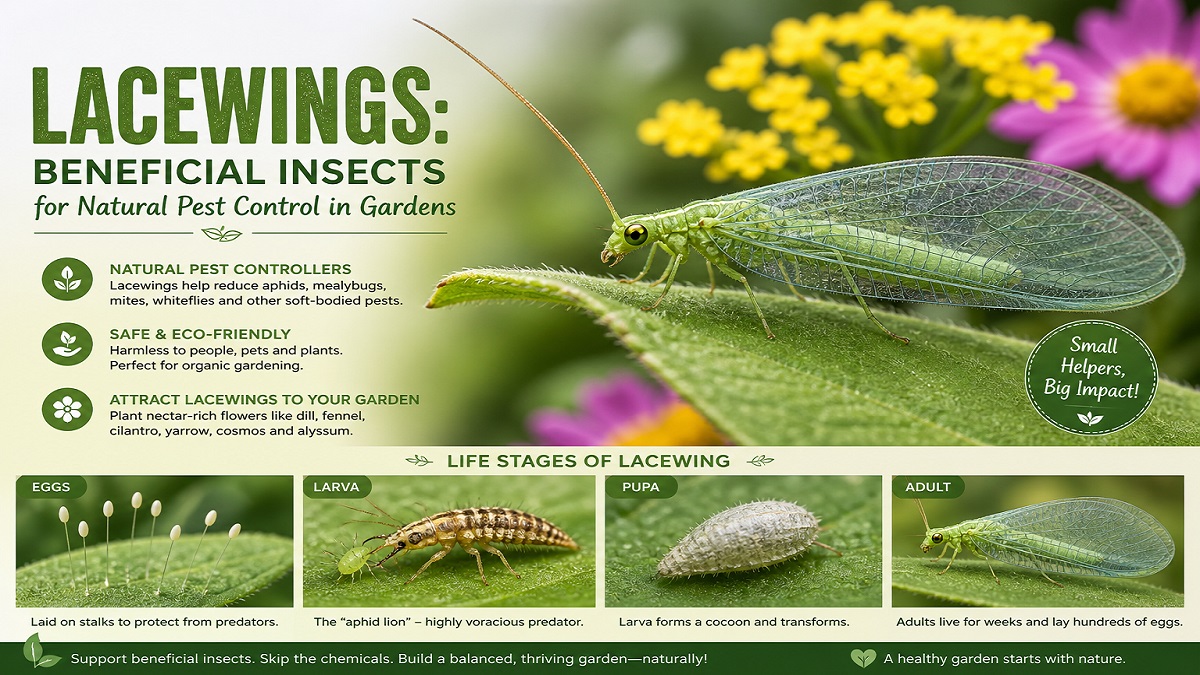
Lacewings are among the most valuable beneficial insects that gardeners, farmers, and horticulture enthusiasts can encourage in their ecosystems. Often overlooked due to their delicate appearance, these insects are actually powerful predators that play a critical role in controlling harmful pests naturally. By reducing reliance on chemical pesticides, lacewings contribute to a healthier environment and more sustainable gardening practices.
In this comprehensive guide, we will explore everything you need to know about lacewings, including their life cycle, benefits, habitat, and how to attract them to your garden.
What Are Lacewings?
Lacewings are soft-bodied insects belonging to the order Neuroptera. They are easily recognized by their transparent, lace-like wings, slender bodies, and large golden or copper-colored eyes. The most commonly encountered species in gardens are green lacewings, although brown lacewings also exist.
Despite their fragile appearance, lacewings are highly efficient predators, especially during their larval stage. These larvae are often called “aphid lions” due to their voracious appetite for aphids and other small pests.
Key Characteristics
- Delicate, transparent wings with visible veins
- Green or brown body coloration
- Large, reflective eyes
- Nocturnal behavior in many species
- Strong predatory larvae
Life Cycle of Lacewings
Understanding the life cycle of lacewings helps gardeners appreciate their role and maximize their effectiveness. Lacewings undergo complete metamorphosis, which includes four stages: egg, larva, pupa, and adult.
1. Egg Stage
Female lacewings lay their eggs on leaves, often attaching them to the surface with fine silk stalks. This unique structure helps protect the eggs from predators and even from cannibalism by newly hatched larvae.
2. Larval Stage
The larval stage is the most important phase for pest control. Lacewing larvae are aggressive predators that feed on a wide variety of soft-bodied insects, including aphids, mealybugs, thrips, and mites.
3. Pupal Stage
After feeding extensively, the larvae spin a cocoon and enter the pupal stage. During this time, they transform into adult lacewings.
4. Adult Stage
Adult lacewings primarily feed on nectar, pollen, and honeydew. While some species may also consume pests, their main contribution is reproduction and maintaining population levels.
Benefits of Lacewings in the Garden
Lacewings are one of the most effective natural pest control agents available. Their presence can significantly reduce pest populations without harming plants or beneficial organisms.
Natural Pest Control
Lacewing larvae consume large numbers of pests daily. A single larva can eat hundreds of aphids during its lifetime, making it an invaluable ally for gardeners.
Reduced Chemical Use
By relying on lacewings for pest management, gardeners can minimize or eliminate the need for chemical pesticides. This leads to safer food, healthier soil, and a more balanced ecosystem.
Pollination Support
Adult lacewings feed on nectar and pollen, indirectly contributing to pollination and plant reproduction.
Eco-Friendly Gardening
Encouraging lacewings supports biodiversity and promotes sustainable gardening practices that protect beneficial insects and wildlife.
Common Pests Controlled by Lacewings
Lacewing larvae are generalist predators, meaning they feed on a wide range of pests. Below is a table showing common pests they help control:
| Pest | Impact on Plants | Lacewing Control Effectiveness |
|---|---|---|
| Aphids | Cause leaf curling and stunted growth | Highly effective |
| Mealybugs | Weaken plants by sucking sap | Very effective |
| Spider Mites | Damage leaves and reduce yield | Effective |
| Thrips | Distort flowers and leaves | Moderately effective |
| Whiteflies | Spread plant diseases | Effective |
How to Attract Lacewings to Your Garden
Creating a lacewing-friendly environment is simple and highly rewarding. By making a few adjustments, you can encourage these beneficial insects to thrive in your garden.
Plant Nectar-Rich Flowers
Adult lacewings rely on nectar and pollen for food. Planting flowers such as dill, fennel, coriander, yarrow, and marigolds can attract them.
Avoid Chemical Pesticides
Chemical pesticides can kill lacewings along with harmful pests. Opt for organic or natural pest control methods instead.
Provide Shelter
Dense vegetation, hedges, and garden debris can serve as shelter for lacewings, especially during the day.
Maintain a Water Source
A shallow water source or moist environment helps support insect life, including lacewings.
Using Lacewings for Biological Control
Lacewings are often used in biological pest control programs. Gardeners and farmers can purchase lacewing eggs or larvae and release them directly onto affected plants.
Release Tips
- Release during early morning or evening
- Ensure pest populations are present for feeding
- Avoid spraying chemicals before or after release
When properly introduced, lacewings can establish themselves and provide long-term pest control benefits.
Difference Between Green and Brown Lacewings
Both green and brown lacewings are beneficial, but they have some differences in behavior and habitat.
| Feature | Green Lacewings | Brown Lacewings |
|---|---|---|
| Color | Bright green | Brown |
| Activity | Nocturnal | Diurnal |
| Egg Placement | On stalks | Directly on leaves |
| Habitat | Gardens and crops | Wider environments |
Challenges and Considerations
While lacewings are highly beneficial, there are some challenges to consider when relying on them for pest control.
- They may disperse quickly if food is scarce
- Environmental conditions affect survival rates
- Overuse of pesticides can eliminate populations
To maximize their effectiveness, maintain a balanced ecosystem and combine lacewings with other beneficial insects.
Conclusion
Lacewings are an essential component of sustainable gardening and agriculture. Their ability to control pests naturally makes them invaluable allies for anyone looking to maintain healthy plants without relying on harmful chemicals.
By understanding their life cycle, encouraging their presence, and providing a supportive environment, you can harness the full potential of these remarkable insects. Whether you are a home gardener or a professional farmer, lacewings offer a simple yet powerful solution to pest management.