Alcohol Solution in Gardening: Smart Uses, Benefits & Safe Practices
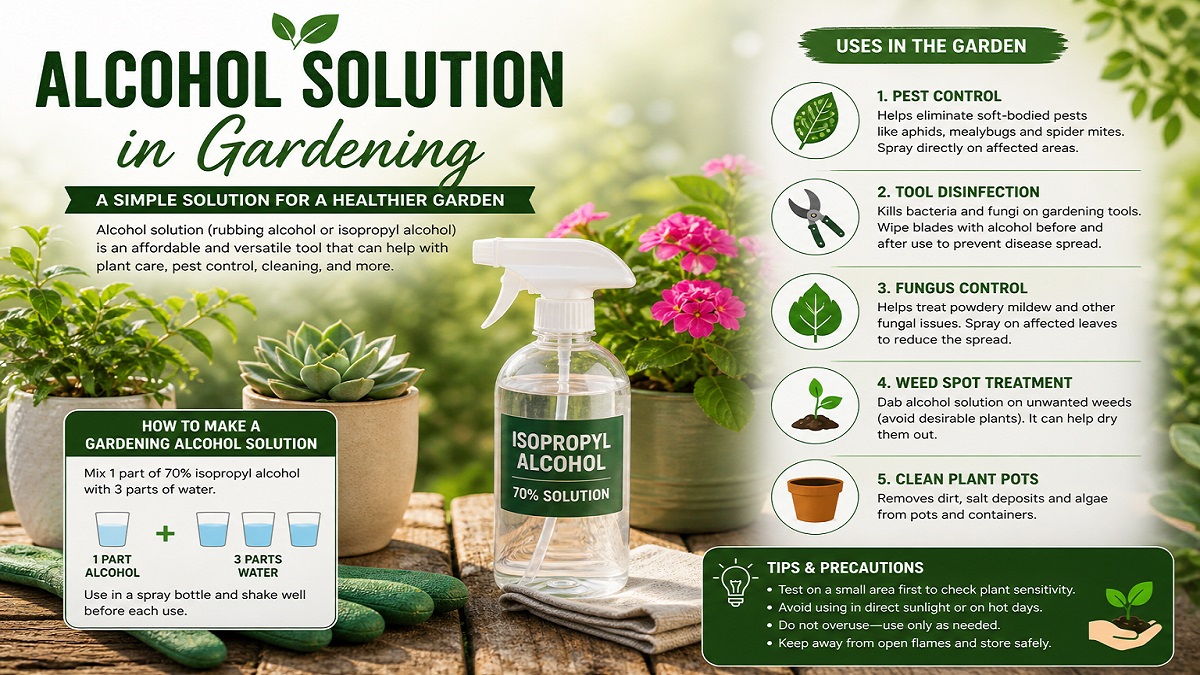
Many gardeners search for simple and effective ways to solve common plant problems without relying heavily on expensive chemical products. One household ingredient that often appears in gardening discussions is alcohol. When properly diluted, alcohol solution can help with pest control, cleaning tools, disinfecting containers, removing sticky residues, and even spot-treating weeds. However, alcohol must always be used carefully because incorrect concentration can damage leaves, roots, and soil life.
This complete guide explains how alcohol solution works in gardening, when to use it, what types of alcohol are suitable, and how to apply it safely. Whether you grow vegetables, flowers, indoor plants, herbs, or ornamental shrubs, understanding responsible use of alcohol can help you maintain a healthier garden.
What Is Alcohol Solution in Gardening?
Alcohol solution usually means a diluted mixture of rubbing alcohol (isopropyl alcohol) or ethanol mixed with water. In gardening, this liquid is commonly used as a contact treatment rather than a fertilizer or nutrient source. Alcohol evaporates quickly and can break down protective coatings on certain pests such as aphids, mealybugs, scale insects, and spider mites.
Gardeners also use alcohol for sanitation. It can disinfect pruning shears, pots, propagation tools, and work surfaces, helping reduce the spread of fungal and bacterial diseases.
Common Types Used
- Isopropyl alcohol (70% preferred for cleaning and dilution)
- Ethanol-based alcohol in limited cases
- Pre-mixed diluted sprays for garden hygiene
Avoid flavored alcohol products, perfumes, or products containing sugars and additives.
Main Uses of Alcohol in Gardening
1. Pest Control
Alcohol can kill soft-bodied insects on contact by dissolving their outer protective layer and dehydrating them. It is especially popular against mealybugs because they often hide in leaf joints and stems.
2. Cleaning Garden Tools
Pruners, scissors, knives, seed trays, and pots may carry disease organisms. Wiping tools with alcohol between cuts can lower contamination risk.
3. Removing Sticky Honeydew
Aphids and scale insects leave behind sugary honeydew that attracts ants and mold. Alcohol solutions can help clean affected stems and leaves.
4. Spot Weed Treatment
Strong alcohol solutions are sometimes used to dry out weeds growing in cracks or hardscape areas. Use carefully because overspray may harm nearby desirable plants.
5. Fungus Prevention on Surfaces
Alcohol can sanitize empty pots, propagation domes, shelves, and benches before planting.
How to Make a Safe Alcohol Spray
For plant pests, the safest method is a mild dilution. Always test one leaf first and wait 24 hours before full use.
| Purpose | Suggested Mix | Notes |
|---|---|---|
| Pest Spray | 1 part 70% alcohol + 7 to 10 parts water | Use on hardy plants only after testing |
| Tool Disinfection | Undiluted or 70% | Wipe blades after pruning |
| Pot Cleaning | 1 part alcohol + 1 part water | Wash then dry thoroughly |
| Weed Spot Treatment | Higher concentration | Use only away from garden plants |
Never assume stronger means better. Excess alcohol may burn foliage quickly.
Best Pests Treated with Alcohol
Alcohol is most effective when directly contacting insects. It usually does not provide long-term residual protection.
- Mealybugs
- Aphids
- Scale crawlers
- Spider mites (light infestations)
- Whitefly nymphs
Heavy infestations may need repeated treatment or integrated pest management methods.
How to Apply Alcohol Spray Correctly
Step 1: Inspect Plants
Check the undersides of leaves, stem joints, and new growth where pests hide.
Step 2: Test First
Spray a small area and wait 24 hours for any browning or leaf curling.
Step 3: Spray in Cool Hours
Apply early morning or evening. Never spray under hot sun.
Step 4: Avoid Overuse
Use only where needed rather than drenching the whole plant repeatedly.
Step 5: Recheck After 3–5 Days
Repeat only if pests remain and plant shows no damage.
Plants Sensitive to Alcohol
Some plants have delicate foliage and can react badly to sprays. Always be extra cautious with:
- Ferns
- Succulent varieties
- Thin-leaf tropical plants
- Seedlings
- Recently transplanted plants
- Wilted or stressed plants
If a plant is already struggling, avoid alcohol treatment until it recovers.
Advantages of Using Alcohol in Gardening
- Low-cost household option
- Quick contact action on pests
- Useful for sanitizing tools
- Evaporates quickly
- Easy spot treatment method
- Can reduce disease spread through dirty tools
Risks and Drawbacks
- Leaf burn if too strong
- No long residual pest protection
- Can stress tender plants
- May kill beneficial insects on contact
- Frequent use may weaken foliage
- Unsafe near open flame
Because of these risks, alcohol should be considered a targeted helper rather than an all-purpose garden spray.
Organic Alternatives to Alcohol
If alcohol seems too harsh for your plants, try these options:
- Neem oil spray
- Insecticidal soap
- Manual pest removal
- Strong water spray for aphids
- Sticky traps
- Beneficial insects like ladybugs
Best Practices for Responsible Use
Always label homemade sprays, keep them away from children and pets, and store in a cool place. Mix small fresh batches instead of storing for months. Never combine alcohol with bleach or unknown chemicals.
Use alcohol as part of an integrated gardening plan that includes healthy soil, airflow, pruning, cleanliness, and pest monitoring.
Tips & Precautions
- Always test on a small area first.
- Keep away from flames.
- Avoid edible crops unless thoroughly researched.
- Avoid using in direct sunlight or on hot days
Frequently Asked Questions
Final Thoughts
Alcohol solution can be a practical gardening tool when used wisely. It is excellent for sanitizing equipment and can help control specific pests through careful spot treatment. However, it is not suitable for every plant or every problem. Proper dilution, testing, timing, and moderation are the keys to success.
If you use alcohol thoughtfully alongside good gardening habits, it can become a valuable part of your plant care toolkit.