Growing & Caring for Bartlett Pear Tree (Pyrus communis ‘Bartlett’)
About Bartlett Pear Tree
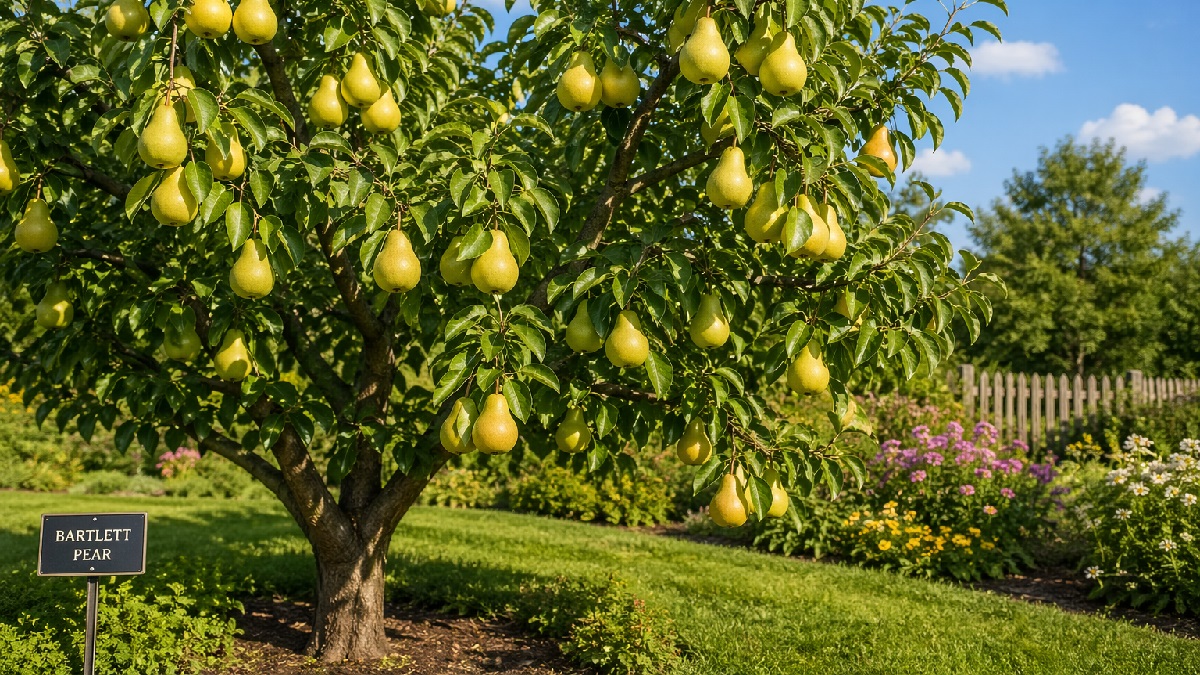
The Bartlett Pear Tree is one of the most popular and widely grown pear varieties, known for its sweet flavor, smooth texture, and versatility in fresh eating and cooking. This deciduous fruit tree produces classic bell-shaped pears that turn from green to golden yellow when ripe, often with a slight red blush. Blooming in spring with clusters of fragrant white flowers, the Bartlett pear tree not only provides delicious fruit but also adds ornamental beauty to gardens and orchards. It typically reaches a height of 15–20 feet, making it suitable for medium-sized landscapes.
Bartlett pear trees thrive in full sun and prefer well-draining, loamy soil with a slightly acidic to neutral pH. Consistent watering is essential, especially during the growing season, but the soil should not become waterlogged. These trees benefit from annual pruning to maintain shape, improve air circulation, and encourage better fruit production. While partially self-fertile, they produce higher yields when planted near another pear variety for cross-pollination.
Hardy in temperate climates, Bartlett pear trees require a period of winter chill to produce fruit effectively. Harvest typically occurs in late summer, with pears picked while still firm and allowed to ripen off the tree for the best flavor. With proper care, this tree can be a productive and rewarding addition to any home garden, offering both aesthetic appeal and a reliable source of fresh, juicy pears.
The Bartlett Pear Tree thrives best in full sun (at least 6–8 hours daily) and well-draining, loamy soil with a slightly acidic to neutral pH. Water young trees regularly to establish strong roots, keeping the soil consistently moist but not waterlogged, while mature trees need moderate watering, especially during dry periods and fruit development. Apply a balanced fertilizer in early spring to support healthy growth, and prune annually during dormancy to remove dead or crowded branches, improve airflow, and maintain shape. These trees benefit from cross-pollination with another pear variety for higher yields, and they require a period of winter chill to fruit well. Mulching around the base helps retain moisture and regulate soil temperature, while monitoring for common pests and diseases like aphids or fire blight ensures the tree stays healthy and productive.
The Bartlett Pear Tree requires full sun for optimal growth and fruit production, meaning at least 6–8 hours of direct sunlight daily. Adequate sunlight helps the tree develop strong branches, improves flowering, and ensures sweeter, well-ripened pears. While it can tolerate light partial shade, insufficient sunlight may lead to reduced fruit yield, poor fruit quality, and increased susceptibility to diseases due to lower air circulation and slower drying of foliage. For best results, plant it in an open area with unobstructed sunlight throughout the day.
The Bartlett Pear Tree grows best in well-draining, fertile loamy soil that retains some moisture without becoming waterlogged. It prefers a slightly acidic to neutral pH (around 6.0–7.0) for optimal nutrient uptake. Good drainage is essential, as overly wet or compacted soils can lead to root rot and poor growth. Amending the soil with organic matter like compost improves structure, aeration, and fertility, helping the tree establish strong roots and produce healthy, high-quality fruit.
The Bartlett Pear Tree requires moderate, consistent watering to stay healthy and productive. Young trees should be watered deeply once or twice a week to help establish strong roots, keeping the soil evenly moist but not soggy. Mature trees are more drought-tolerant but still benefit from deep watering during dry spells, especially during flowering and fruit development. Avoid overwatering, as waterlogged soil can lead to root rot and disease. Applying mulch around the base helps retain moisture, regulate soil temperature, and reduce the frequency of watering.
The Bartlett Pear Tree grows best in temperate climates with a clear winter chill period and warm summers. It prefers temperatures between 15°C and 30°C during the growing season, while winter cold is necessary for proper dormancy and fruit set. The tree is moderately cold-hardy but can be sensitive to late spring frosts, which may damage blossoms. In terms of humidity, it tolerates average humidity levels but benefits from good air circulation to prevent fungal diseases. Extremely high humidity can increase the risk of issues like leaf spot or blight, so proper spacing and pruning are important to keep the tree healthy.
The Bartlett Pear Tree benefits from a balanced, slow-release fertilizer applied in early spring just before new growth begins. A fertilizer with an equal ratio such as 10-10-10 supports healthy leaf, root, and fruit development. Young trees need lighter feeding to avoid excessive leafy growth, while mature trees can handle a slightly higher amount based on their size and productivity. Avoid over-fertilizing, as too much nitrogen can reduce fruit yield and make the tree more susceptible to disease. Adding organic matter like compost or well-rotted manure also improves soil fertility naturally and supports steady, long-term growth.
The Bartlett Pear Tree should be pruned annually during late winter while the tree is dormant to maintain shape, improve air circulation, and encourage better fruit production. Remove dead, damaged, or diseased branches first, then thin out crowded or crossing limbs to allow sunlight to reach the center of the tree. Focus on developing a strong, open framework (often a central leader shape) to support healthy growth. Light summer pruning can also be done to control excessive growth. Avoid heavy pruning at once, as it can reduce fruiting and stimulate too much vegetative growth.
The Bartlett Pear Tree is most commonly propagated through grafting rather than seeds, as this ensures the new tree produces the same quality fruit as the parent. Typically, a healthy Bartlett scion (a cutting from a desired tree) is grafted onto a compatible rootstock in late winter or early spring. Methods like whip-and-tongue or cleft grafting are often used for best success. While propagation from cuttings is possible, it is less reliable and slower to establish. Seed propagation is not recommended for true-to-type growth, as it may result in trees with different fruit characteristics and lower quality yields.
Growing a Bartlett Pear Tree from seed is possible but not ideal for producing true-to-type fruit, as seedlings often vary from the parent tree. To start, collect seeds from ripe pears, clean off any pulp, and allow them to dry briefly. Then place the seeds in a moist medium (like peat moss or paper towel) and refrigerate them for 8–12 weeks to simulate winter conditions (a process called stratification). After this chilling period, plant the seeds about ½ inch deep in well-draining soil and keep them in a warm, bright location with consistent moisture. Germination may take a few weeks. As seedlings grow, transplant them into larger pots or outdoors once they are strong enough. Keep in mind that trees grown from seed can take many years to bear fruit and may not produce the same quality pears as the original Bartlett variety.
The Bartlett Pear Tree can be grown in containers when young, though it eventually prefers planting in the ground due to its size. Use a large pot with good drainage holes and fill it with a well-draining, fertile potting mix enriched with compost. Choose a container at least 18–24 inches wide to allow root development. Water regularly to keep the soil evenly moist, as potted trees dry out faster than those in the ground. Repot every 2–3 years or when roots become crowded, moving the tree to a slightly larger container and refreshing the soil to maintain nutrients. Light root pruning during repotting can help control growth and keep the tree healthy.
The Bartlett Pear Tree is a cold-hardy deciduous tree that naturally goes dormant in winter, but it still benefits from some protection, especially when young or grown in containers. In the ground, apply a thick layer of mulch around the base to insulate the roots and retain soil moisture, keeping it a few inches away from the trunk to prevent rot. For potted trees, move them to a sheltered, unheated location such as a garage or balcony where they are protected from extreme frost and strong winds. Water sparingly during dormancy—just enough to keep the soil from completely drying out. In regions with mild winters, ensure the tree still receives enough chilling hours for proper fruiting, while in colder areas, protecting the trunk with wraps can help prevent frost damage.
The Bartlett Pear Tree blooms in spring when it receives the right balance of climate conditions and care. To encourage flowering, the tree needs a proper winter chill period, which helps trigger bud formation. Plant it in full sun so it gets enough energy to produce flowers, and avoid excessive nitrogen fertilizer, as this promotes leafy growth instead of blooms. Regular pruning during dormancy improves light penetration and airflow, supporting healthy flower bud development. Ensuring good pollination is also important—planting another compatible pear variety nearby increases the chances of abundant blossoms and fruit set. Protect the tree from late spring frosts, as cold damage can reduce or destroy flower buds.
The Bartlett Pear Tree can be affected by several pests and diseases if not properly maintained. Common pests include aphids, pear psylla, and codling moths, which damage leaves and fruit by feeding or laying eggs. Among diseases, Fire Blight is one of the most serious, causing blackened, wilted shoots, while fungal issues like leaf spot and powdery mildew can also occur in humid conditions. Root rot may develop in poorly drained soil. Other problems include poor fruiting due to lack of pollination or insufficient sunlight, and fruit drop caused by stress from irregular watering. To prevent these issues, maintain good air circulation through pruning, avoid overhead watering, keep the area clean of fallen debris, and monitor regularly so problems can be treated early with appropriate organic or chemical controls.
Related Guides
Bartlett Pear Tree FAQs
How long does a Bartlett pear tree take to bear fruit?
A Bartlett pear tree typically takes about 3 to 6 years to start producing fruit when grown from a grafted sapling. Trees grown from seed may take much longer, often 8–10 years or more, and may not produce the same quality fruit.
Do Bartlett pear trees need a pollinator?
Bartlett pear trees are partially self-fertile, but they produce significantly better yields when planted near another compatible pear variety. Cross-pollination improves fruit size, quantity, and overall quality.
When is the best time to harvest Bartlett pears?
Bartlett pears are usually harvested in late summer when they are still firm and green. They should be picked before fully ripening on the tree and allowed to ripen indoors for the best flavor and texture.
Why are my Bartlett pear tree leaves turning brown or black?
Browning or blackening leaves may be caused by diseases like fire blight, fungal infections, or environmental stress such as overwatering or poor drainage. Proper pruning, good air circulation, and avoiding overhead watering can help prevent these issues.
How often should I water a Bartlett pear tree?
Young trees need deep watering once or twice a week to establish roots, while mature trees require moderate watering during dry periods. The soil should remain moist but never waterlogged to avoid root rot.
Can Bartlett pear trees grow in pots?
Yes, Bartlett pear trees can be grown in large containers when young, but they eventually outgrow pots and perform best when planted in the ground. Use a large container with good drainage and nutrient-rich soil for healthy growth.
What is the best fertilizer for a Bartlett pear tree?
A balanced fertilizer such as 10-10-10 applied in early spring works well for Bartlett pear trees. Organic options like compost or well-rotted manure can also improve soil fertility and support long-term growth.
Why is my Bartlett pear tree not producing fruit?
Lack of fruiting may be due to insufficient sunlight, poor pollination, lack of winter chill, or excessive nitrogen fertilizer. Ensuring proper care, planting a pollinator tree nearby, and providing full sun can help improve fruit production.
How big does a Bartlett pear tree grow?
A standard Bartlett pear tree typically grows 15–20 feet tall and wide, though its size can vary depending on the rootstock and growing conditions. Dwarf varieties remain smaller and are suitable for compact spaces.
Is Bartlett pear tree suitable for warm climates?
Bartlett pear trees prefer temperate climates with a winter chill period. They can grow in moderately warm regions but may struggle to produce fruit if they do not receive enough chilling hours during winter.