Armyworms in Gardening: How to Identify, Prevent, and Control Them Naturally
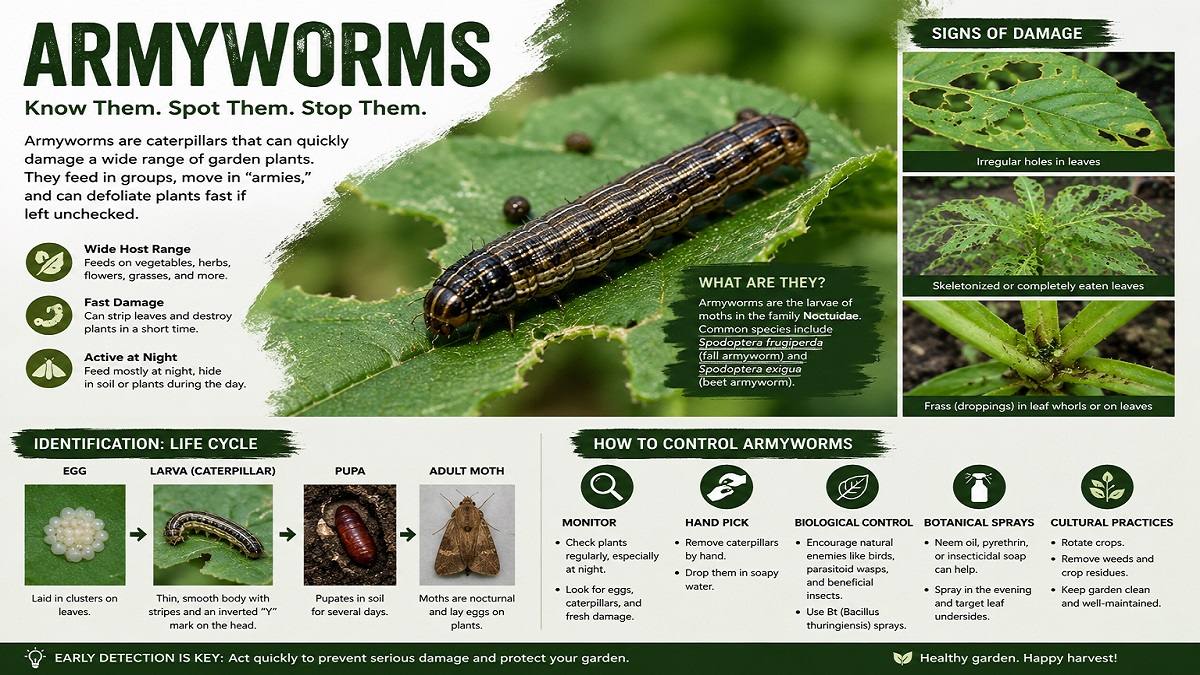
Armyworms are among the most destructive garden pests that homeowners and vegetable growers encounter during warm seasons. These caterpillars are known for feeding aggressively on leaves, grass, vegetables, and ornamental plants. They move in groups and consume plant material quickly, which is why they are called “armyworms.” A small infestation can become a serious problem within days if gardeners fail to notice the early warning signs.
Although armyworms are more commonly associated with lawns and large agricultural crops, they frequently invade home gardens, raised beds, flower borders, and even container plants. Gardeners often discover irregular holes in leaves, skeletonized foliage, or entire sections of grass stripped bare overnight. These pests are particularly active during late summer and early fall, though infestations may occur anytime temperatures remain warm.
Understanding how armyworms behave is the key to controlling them effectively. Fortunately, gardeners can manage infestations using natural methods, organic treatments, proper monitoring, and healthy garden practices. This guide explains everything you need to know about identifying armyworms, understanding their life cycle, recognizing damage symptoms, and using both natural and chemical controls responsibly.
What Are Armyworms?
Armyworms are the larval stage of several moth species belonging primarily to the genus Spodoptera. The caterpillars hatch from eggs laid by adult moths and immediately begin feeding on nearby vegetation. Unlike many solitary caterpillars, armyworms often feed in groups and migrate together across lawns or garden beds in search of fresh food sources.
These pests are usually green, brown, black, or striped depending on the species and growth stage. Mature larvae can reach 1.5 to 2 inches in length. Most species have distinctive stripes running along the body and an inverted “Y” marking on the head.
Armyworms are especially dangerous because of their enormous appetite. Young caterpillars chew small holes in leaves, while mature larvae devour entire sections of plants. Severe infestations may leave only stems behind.
Common Types of Armyworms
- Fall armyworm
- Beet armyworm
- True armyworm
- Yellow-striped armyworm
Different species prefer different host plants, but most attack vegetables, grasses, grains, flowers, and turfgrass.
How to Identify Armyworms in the Garden
Early identification is critical because armyworms spread quickly. Many gardeners first notice plant damage before spotting the caterpillars themselves. Careful inspection during early morning or evening hours usually reveals active larvae feeding on leaves.
Physical Characteristics
- Length between 1 and 2 inches
- Smooth bodies with stripes
- Green, brown, black, or gray coloring
- Large dark spots along the sides
- Distinctive inverted “Y” mark on the head
Signs of Armyworm Damage
- Chewed or ragged leaves
- Skeletonized foliage
- Grass blades eaten down to the crown
- Brown patches in lawns
- Rapid overnight plant damage
- Clusters of caterpillars on plants
Young larvae often hide beneath leaves during the day and feed at night. Gardeners should inspect leaf undersides, mulch layers, and shaded areas near damaged plants.
Plants Commonly Attacked by Armyworms
Armyworms feed on a wide variety of plants. While turfgrass is a favorite target, vegetable gardens can suffer major losses during outbreaks.
| Plant Type | Examples | Damage Severity |
|---|---|---|
| Vegetables | Tomatoes, peppers, corn, lettuce | High |
| Leafy Greens | Spinach, kale, cabbage | Very High |
| Lawns | Bermuda grass, fescue | Very High |
| Flowers | Petunias, marigolds, chrysanthemums | Moderate |
| Herbs | Basil, parsley, cilantro | Moderate |
Corn is especially vulnerable because armyworms often hide deep inside the whorl where they remain protected from predators and sprays.
The Armyworm Life Cycle
Understanding the armyworm life cycle helps gardeners target treatments at the most vulnerable stage. Warm temperatures allow rapid development, which means several generations may appear in a single growing season.
Egg Stage
Adult moths lay clusters of eggs on leaves, grass, or weeds. Eggs hatch within a few days depending on weather conditions.
Larval Stage
The larval stage is the destructive feeding stage. Young caterpillars feed in groups and grow rapidly. This stage usually lasts two to three weeks.
Pupal Stage
Mature larvae burrow into soil and form pupae. During this stage, they transform into moths.
Adult Moth Stage
Adult moths emerge and begin laying eggs shortly afterward, restarting the cycle. Warm climates can support multiple generations annually.
Why Armyworms Spread So Quickly
Armyworms can devastate a garden rapidly because they feed continuously and travel in groups. Large populations strip one area before moving together to the next food source. Their feeding activity is most intense during warm, humid weather conditions.
Several factors contribute to rapid outbreaks:
- Warm seasonal temperatures
- Excessive lawn thatch
- Overgrown weeds
- Lack of natural predators
- Extended rainy periods
- Dense planting conditions
Home gardens located near grassy fields or unmanaged landscapes are often more vulnerable because adult moths migrate easily between areas.
Natural and Organic Armyworm Control Methods
Many gardeners prefer organic methods because they reduce harm to pollinators, beneficial insects, pets, and wildlife. Natural controls are often highly effective when infestations are discovered early.
Hand Removal
Small infestations can often be managed by handpicking caterpillars from plants. Drop them into a bucket of soapy water to eliminate them safely.
Encourage Natural Predators
Birds, parasitic wasps, ground beetles, and beneficial insects naturally reduce armyworm populations. Avoid broad-spectrum insecticides that kill helpful predators.
Use Bacillus thuringiensis (Bt)
Bt is a naturally occurring soil bacterium widely used in organic gardening. When caterpillars consume treated leaves, the bacteria disrupt their digestive system and stop feeding activity.
Neem Oil Sprays
Neem oil interferes with insect growth and feeding behavior. It works best on young larvae and should be applied during cooler evening hours.
Spinosad Treatments
Spinosad is another organic insect control derived from naturally occurring soil microbes. It is highly effective against caterpillars when applied correctly.
Reduce Lawn Thatch
Thick thatch layers provide hiding places for armyworms. Regular lawn maintenance improves airflow and reduces pest shelter.
Chemical Treatments for Severe Infestations
Severe armyworm outbreaks sometimes require chemical intervention, especially when lawns or food crops face extensive destruction. Gardeners should always use pesticides responsibly and follow label instructions carefully.
Products containing pyrethroids or carbaryl are commonly used for armyworm control. However, these chemicals may also harm beneficial insects and pollinators. Spot treatment is usually preferable to widespread spraying.
The best time to apply treatments is late afternoon or evening when caterpillars become active. Young larvae are easier to control than mature caterpillars.
| Control Method | Best For | Organic? |
|---|---|---|
| Handpicking | Small infestations | Yes |
| Bt Spray | Young caterpillars | Yes |
| Neem Oil | Light infestations | Yes |
| Spinosad | Moderate infestations | Yes |
| Pyrethroid Insecticides | Severe outbreaks | No |
How to Prevent Future Armyworm Infestations
Prevention is one of the most effective long-term strategies for managing armyworms in home gardens. Healthy plants are generally more resilient and recover faster from feeding damage.
Inspect Plants Regularly
Frequent garden inspections help detect eggs and young larvae before populations explode. Examine leaves weekly during warm weather.
Keep Weeds Under Control
Weeds provide alternative food and shelter for armyworms. Keeping garden borders clean reduces hiding spots.
Rotate Crops
Crop rotation disrupts pest life cycles and reduces recurring infestations in vegetable gardens.
Encourage Biodiversity
Gardens filled with flowers, herbs, and diverse plant species attract beneficial insects that naturally prey on armyworms.
Avoid Excess Nitrogen Fertilizer
Overfertilized plants produce lush growth that attracts caterpillars. Balanced fertilization supports healthier, more resistant plants.
Armyworms in Lawns
Armyworms frequently attack lawns during hot weather. Infested grass develops brown patches that may resemble drought stress or fungal disease. Closer inspection often reveals chewed grass blades and active caterpillars near the soil surface.
A simple soap flush test helps confirm infestations. Mix mild dish soap with water and pour it over a small lawn section. Armyworms usually emerge from the grass within minutes.
Watering deeply and maintaining proper mowing height improves lawn recovery after damage. Severely damaged turf may require reseeding once pests are eliminated.
Common Mistakes Gardeners Make
Several common mistakes allow armyworm populations to expand unchecked:
- Ignoring early signs of leaf damage
- Using ineffective sprays too late
- Overwatering lawns
- Applying pesticides during midday heat
- Destroying beneficial insects with broad-spectrum chemicals
- Failing to inspect plants regularly
Consistent monitoring and early intervention provide the best defense against severe outbreaks.
Final Thoughts
Armyworms are aggressive garden pests capable of damaging vegetables, lawns, flowers, and ornamental plants in a surprisingly short period. Their group feeding behavior and rapid reproduction make early detection essential for successful control.
Fortunately, gardeners have many effective options available. Organic solutions such as Bt, neem oil, hand removal, and beneficial predators can significantly reduce infestations without harming the environment. Healthy gardening practices, proper lawn maintenance, and routine inspections also play an important role in prevention.
Whether you maintain a small backyard garden or a large vegetable plot, understanding armyworm behavior helps protect your plants throughout the growing season. With timely action and consistent care, most infestations can be managed successfully before major damage occurs.