Beneficial Nematodes in the Garden: Natural Pest Control for Healthy Soil
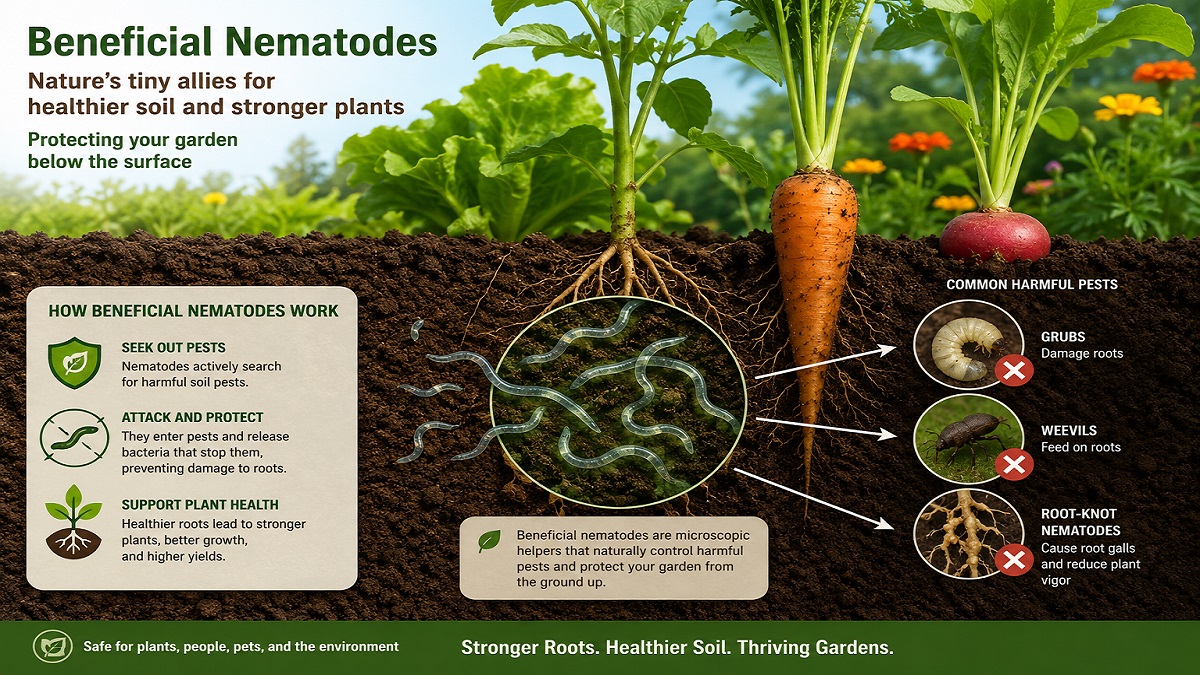
Beneficial nematodes are one of the most effective natural tools available for organic pest control in home gardens. These microscopic roundworms live in the soil and actively hunt destructive insects that damage plant roots, vegetables, lawns, flowers, and fruit crops. Unlike chemical pesticides, beneficial nematodes are completely safe for humans, pets, earthworms, pollinators, and plants.
Many gardeners struggle with hidden soil pests that attack plants below the surface. Grubs, fungus gnats, cutworms, root weevils, flea larvae, and various beetle larvae can destroy healthy gardens without obvious warning signs. Beneficial nematodes provide a biological solution by targeting these pests where they live and reproduce.
Once introduced into moist soil, nematodes search for host insects and enter their bodies through natural openings. Inside the pest, they release bacteria that quickly kill the insect. The nematodes then reproduce within the dead host before spreading through the soil to find more pests.
Because they are naturally occurring organisms, beneficial nematodes fit perfectly into organic gardening systems, regenerative gardening, and sustainable landscaping practices. They help reduce reliance on harsh pesticides while improving soil balance and plant health.
What Are Beneficial Nematodes?
Beneficial nematodes are microscopic parasitic roundworms that naturally occur in healthy soils worldwide. While some nematodes are harmful to plants, beneficial species attack insect pests instead of plant roots.
These helpful organisms belong mainly to the genera Steinernema and Heterorhabditis. They are invisible to the naked eye and move through water films in soil searching for insects to infect.
How They Work
Beneficial nematodes locate insects by detecting carbon dioxide, heat, and movement. After entering the insect, they release symbiotic bacteria that kill the pest within 24 to 48 hours. The nematodes feed, multiply, and continue their life cycle by searching for additional hosts.
Why Gardeners Use Them
- Natural alternative to chemical pesticides
- Safe for children and pets
- Non-toxic to bees and butterflies
- Effective against many underground pests
- Can reduce long-term pest populations
- Suitable for vegetable gardens and lawns
Common Garden Pests Controlled by Beneficial Nematodes
Beneficial nematodes can control a wide range of damaging soil insects. Different species target different pests, so selecting the right nematode type is important.
| Pest | Damage Caused | Recommended Nematode |
|---|---|---|
| Grubs | Destroy lawn roots | Heterorhabditis bacteriophora |
| Fungus Gnat Larvae | Damage seedlings and roots | Steinernema feltiae |
| Cutworms | Cut young seedlings | Steinernema carpocapsae |
| Root Weevils | Damage plant roots | Heterorhabditis species |
| Flea Larvae | Develop in soil | Steinernema feltiae |
| Beetle Larvae | Feed on roots and tubers | Heterorhabditis bacteriophora |
Gardeners often notice improved plant vigor and reduced pest damage within weeks after applying beneficial nematodes correctly.
Benefits of Beneficial Nematodes
1. Organic and Eco-Friendly
Beneficial nematodes are approved for organic gardening because they occur naturally and do not leave harmful residues in soil or food crops.
2. Safe Around Pollinators
Unlike broad-spectrum pesticides, nematodes target soil-dwelling insects and do not harm bees, ladybugs, lacewings, butterflies, or birds.
3. Reduced Chemical Use
Regular biological pest control lowers dependence on synthetic pesticides, which can damage soil ecosystems and beneficial insects.
4. Long-Term Pest Management
In favorable soil conditions, beneficial nematodes may establish populations that continue suppressing pests over time.
5. Effective in Difficult Areas
Soil pests are often hard to reach with sprays. Nematodes move through soil naturally and reach hidden larvae underground.
When to Apply Beneficial Nematodes
Timing is critical for successful nematode applications. They work best when target pests are in their larval stages and soil conditions remain moist.
Best Seasons
- Spring for early pest prevention
- Late summer for grub control
- Autumn for overwintering larvae
Ideal Soil Conditions
- Moist but not waterlogged soil
- Temperatures between 12°C and 30°C
- Cloudy days or evening applications
- Low UV exposure
Nematodes are living organisms and can die if exposed to direct sunlight, dry soil, or extreme temperatures.
How to Apply Beneficial Nematodes
Proper application greatly improves nematode survival and effectiveness.
Step 1: Water the Soil
Thoroughly moisten the soil before application. Nematodes travel through water films between soil particles.
Step 2: Mix with Water
Most nematodes arrive in a sponge, gel, powder, or clay carrier. Mix them with water according to package instructions.
Step 3: Apply Evenly
Use a watering can, hose-end sprayer, pump sprayer, or irrigation system to distribute the nematodes evenly over the treatment area.
Step 4: Keep Soil Moist
Water lightly after application and maintain soil moisture for at least one to two weeks.
Step 5: Avoid Chemicals
Avoid applying harsh insecticides before or after nematode treatments, as some chemicals can reduce nematode survival.
Beneficial Nematodes for Vegetable Gardens
Vegetable gardens often attract soil pests that damage roots, tubers, stems, and seedlings. Beneficial nematodes help protect crops naturally while supporting healthier soil ecosystems.
Common Vegetable Garden Targets
- Cutworms attacking lettuce and cabbage
- Root maggots damaging carrots and onions
- Fungus gnats in seed trays
- Beetle larvae feeding on potatoes
- Armyworms affecting leafy greens
Gardeners using raised beds and intensive planting systems often benefit significantly from biological pest management because pests spread quickly in dense growing spaces.
Using Beneficial Nematodes on Lawns
Lawn grubs are among the most common targets for beneficial nematodes. These pests feed on grass roots and attract predators like birds, raccoons, and skunks that dig up lawns searching for food.
Signs of grub damage include:
- Brown patches in turf
- Loose grass that lifts easily
- Birds pecking at the lawn
- Irregular dead areas
Applying beneficial nematodes in late summer often produces the best results because young grubs are easier to control.
How Beneficial Nematodes Improve Soil Health
Healthy soil contains diverse microorganisms that support plant growth and natural pest suppression. Beneficial nematodes contribute to this ecosystem by reducing damaging insect populations without harming soil biology.
Over time, excessive chemical pesticide use can disrupt microbial communities and reduce soil biodiversity. Biological controls like nematodes help maintain ecological balance.
Soil Benefits Include
- Reduced chemical residues
- Improved biological diversity
- Healthier root systems
- More balanced soil ecosystems
- Better long-term sustainability
Common Mistakes When Using Beneficial Nematodes
Applying in Dry Soil
Dry conditions prevent nematodes from moving effectively. Always maintain adequate soil moisture.
Using Expired Products
Beneficial nematodes are living organisms with limited shelf life. Store them refrigerated and use them before expiration.
Applying During Hot Sunlight
UV radiation and high temperatures quickly kill nematodes. Apply during early morning or evening hours.
Choosing the Wrong Species
Different pests require different nematode species. Always identify your target pest before purchasing.
Expecting Instant Results
Biological control works gradually. Visible improvements may take several days or weeks depending on pest populations.
Beneficial Nematodes vs Chemical Pesticides
| Feature | Beneficial Nematodes | Chemical Pesticides |
|---|---|---|
| Environmental Safety | Very safe | May harm ecosystems |
| Pollinator Safety | Safe for bees | Some products harmful |
| Residues | No toxic residue | Possible residues |
| Resistance Issues | Rare | Common over time |
| Target Area | Soil pests | Broad-spectrum often |
| Organic Gardening | Approved | Often restricted |
While chemical treatments may offer rapid knockdown, beneficial nematodes provide a safer and more sustainable long-term approach for many gardening situations.
Can Beneficial Nematodes Be Used Indoors?
Yes, beneficial nematodes are frequently used indoors for fungus gnat control in houseplants, greenhouses, and indoor seed-starting systems.
Fungus gnats thrive in moist potting soil and can damage delicate roots and seedlings. Applying Steinernema feltiae to indoor containers helps break the pest life cycle naturally.
Indoor gardeners should avoid overwatering while using nematodes because excessively wet soil can encourage further gnat reproduction.
Frequently Asked Questions
Final Thoughts
Beneficial nematodes are among the most valuable biological pest control tools available to modern gardeners. They target destructive soil pests naturally while protecting pollinators, pets, wildlife, and soil ecosystems.
Whether you grow vegetables, flowers, lawns, fruit trees, or indoor plants, beneficial nematodes can help create a healthier and more sustainable growing environment. Their ability to control hidden underground pests makes them especially useful in organic gardening systems where chemical-free solutions are preferred.
By understanding how nematodes work, selecting the correct species, and applying them under proper soil conditions, gardeners can significantly reduce pest problems while supporting long-term soil health and biodiversity.