Best Mulch for Flower Beds: Complete Guide for Healthy, Beautiful Gardens
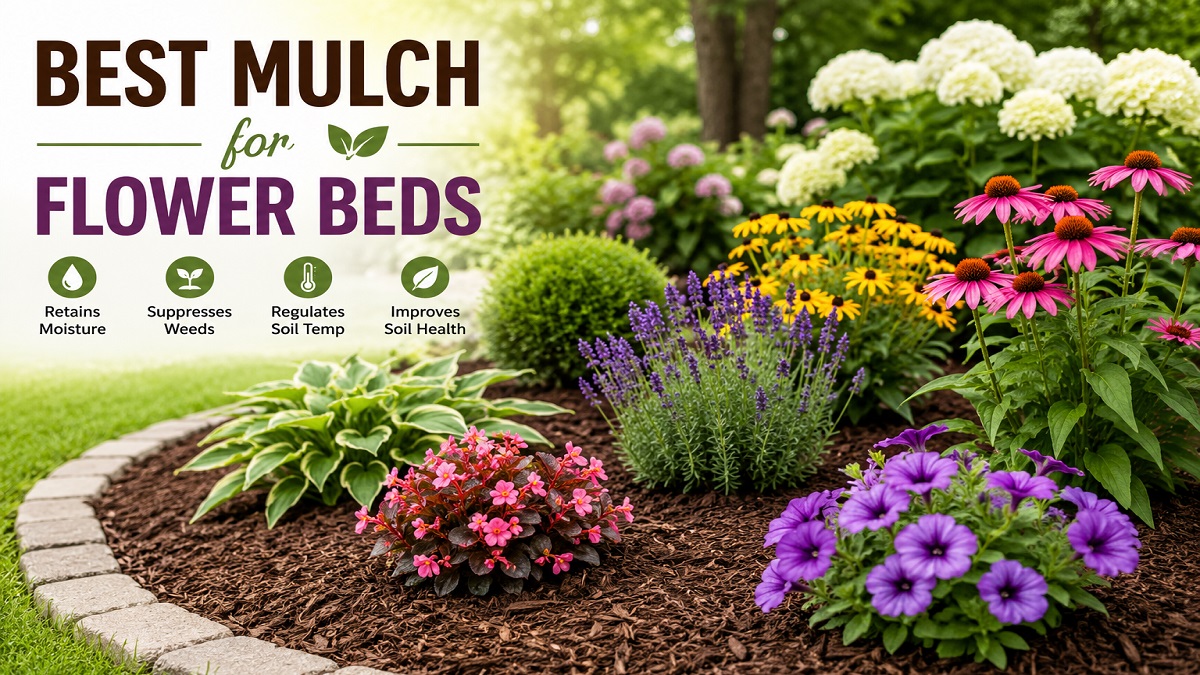
Mulch is one of the simplest yet most powerful tools for maintaining beautiful flower beds. Whether you grow roses, annual blooms, native wildflowers, or ornamental shrubs, the right mulch improves soil quality, retains moisture, suppresses weeds, and gives your landscape a polished look.
But not all mulch is created equal. Some mulches enrich soil naturally, while others are mainly decorative. Some work well in hot climates, while others are ideal for damp environments. Choosing the best mulch depends on your plants, climate, budget, and maintenance preferences.
In this guide, we’ll cover the best mulch for flower beds, compare popular mulch types, and help you choose the ideal option for healthier blooms and less garden work.
Why Mulch Matters in Flower Beds
Flower beds face constant stress from sun, wind, weeds, temperature fluctuations, and water evaporation. Mulch acts as a protective blanket over the soil and offers several major benefits.
- Reduces moisture loss by slowing evaporation
- Suppresses weed growth by blocking sunlight
- Regulates soil temperature
- Protects roots during heat and frost
- Improves soil structure as organic mulch decomposes
- Prevents soil erosion during heavy rain
- Enhances the visual appeal of flower beds
Proper mulching can reduce watering frequency significantly while improving plant vigor. For gardeners looking to minimize maintenance, mulch is essential.
Types of Mulch for Flower Beds
Mulch generally falls into two categories: organic and inorganic.
Organic Mulch
Organic mulches come from natural materials and decompose over time. They improve soil quality and support beneficial microbes.
- Wood chips
- Bark mulch
- Compost
- Straw
- Pine needles
- Leaves
- Grass clippings
Inorganic Mulch
Inorganic mulches do not decompose and mainly serve decorative or protective purposes.
- Landscape fabric
- Rubber mulch
- Pebbles
- Gravel
- Stone
Best Mulch for Flower Beds
1. Shredded Bark Mulch (Best Overall)
Shredded bark is widely considered the best all-purpose mulch for flower beds. It looks attractive, lasts a long time, and breaks down slowly.
- Excellent moisture retention
- Great weed suppression
- Improves aesthetics
- Long-lasting coverage
Best for: Most flower beds and ornamental gardens.
2. Compost (Best for Soil Health)
Compost acts as both mulch and fertilizer. It enriches soil with nutrients while improving microbial activity.
- Adds nutrients
- Improves soil structure
- Boosts plant growth
Best for: Nutrient-hungry flowering plants.
3. Pine Needles (Best for Acid-Loving Flowers)
Pine needles create a soft, airy mulch that resists compaction and allows water to penetrate easily.
Best for: Azaleas, hydrangeas, camellias, and other acid-loving plants.
4. Straw (Best Budget Mulch)
Straw is inexpensive and provides good insulation. It breaks down relatively quickly, improving soil over time.
Best for: Seasonal flower beds and budget gardening.
5. Wood Chips (Best Long-Term Mulch)
Wood chips last longer than many organic mulches and are ideal for large flower beds.
Best for: Perennial beds and landscaping borders.
6. Leaf Mulch (Best Free Option)
Shredded leaves are often free and highly beneficial for soil. They mimic natural forest floor conditions.
Best for: Eco-friendly gardeners.
Mulch Comparison Table
| Mulch Type | Moisture Retention | Weed Control | Lifespan |
|---|---|---|---|
| Shredded Bark | Excellent | Excellent | Long |
| Compost | Good | Moderate | Short |
| Pine Needles | Good | Moderate | Medium |
| Straw | Good | Moderate | Short |
| Wood Chips | Excellent | Excellent | Very Long |
| Leaf Mulch | Good | Good | Medium |
How Much Mulch Should You Apply?
Most flower beds benefit from a mulch depth of 2–3 inches. This is thick enough to block weeds while allowing water and air movement.
- 1 inch: Too thin for weed suppression
- 2–3 inches: Ideal depth
- 4+ inches: Can suffocate roots
Keep mulch 2–3 inches away from plant stems to prevent rot and fungal issues.
Common Mulching Mistakes
Using Too Much Mulch
Excess mulch blocks oxygen and traps moisture around roots.
Mulch Volcanoes Around Plants
Piling mulch against stems encourages disease and pest problems.
Using Fresh Wood Chips Directly
Fresh wood can temporarily tie up nitrogen during decomposition.
Ignoring Weed Removal First
Always remove weeds before mulching to avoid trapping them underneath.
Organic vs Inorganic Mulch
| Feature | Organic | Inorganic |
|---|---|---|
| Improves Soil | Yes | No |
| Breaks Down | Yes | No |
| Maintenance | Medium | Low |
| Natural Look | Excellent | Varies |
Organic mulch is generally better for flower beds because flowers benefit greatly from improved soil biology and nutrient cycling.
Best Mulch by Climate
Hot, Dry Climates
Choose bark, wood chips, or compost to retain moisture longer.
Cold Climates
Thick bark or straw provides root insulation during frost.
Rainy Regions
Use coarse bark or pine needles to improve drainage and prevent compaction.
When to Mulch Flower Beds
The best time to apply mulch depends on seasonal conditions.
- Spring: After soil warms
- Summer: To reduce evaporation
- Fall: To insulate roots
Spring is typically the most popular season for mulching flower beds.
Final Verdict: What Is the Best Mulch for Flower Beds?
If you want the best all-around option, shredded bark mulch is hard to beat. It offers strong weed control, excellent moisture retention, and a polished appearance.
If soil health is your priority, compost is unbeatable. For budget-conscious gardeners, leaf mulch or straw provides outstanding value.
Ultimately, the best mulch depends on your garden’s specific needs—but nearly every flower bed benefits from proper mulching.