Bird-Friendly Gardens: How to Create a Backyard Haven for Birds
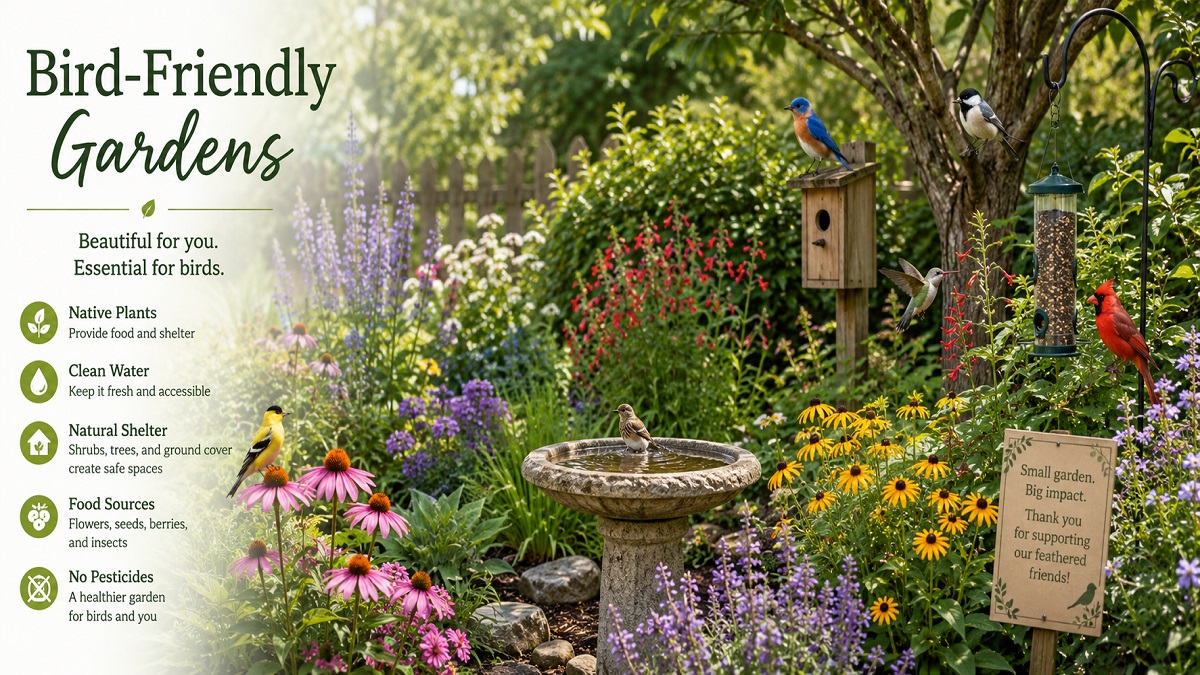
A bird-friendly garden is more than just a beautiful outdoor space. It is a thriving ecosystem that supports local bird populations while bringing life, color, and natural sounds to your backyard. Birds help control pests, pollinate plants, spread seeds, and contribute to biodiversity. By making a few thoughtful choices in your garden design, you can create a welcoming habitat that benefits both wildlife and your family.
Whether you have a large backyard, a small urban garden, or even a balcony filled with containers, you can attract a variety of bird species by providing food, water, shelter, and safe nesting areas. This guide explains everything you need to know about creating and maintaining a bird-friendly garden throughout the year.
Why Bird-Friendly Gardens Matter
Bird populations around the world face increasing challenges due to habitat loss, pollution, climate change, and urban development. Residential gardens can serve as valuable refuges for birds by providing resources they need to survive.
A garden designed with birds in mind helps create wildlife corridors between natural habitats. These spaces allow birds to feed, rest, breed, and migrate more successfully. At the same time, homeowners enjoy the benefits of increased biodiversity and natural pest control.
- Supports local and migratory bird species.
- Promotes ecological balance.
- Reduces reliance on chemical pest control.
- Improves pollination and seed dispersal.
- Enhances outdoor enjoyment and nature observation.
The Four Essentials of a Bird-Friendly Garden
Birds require four basic elements to thrive: food, water, shelter, and nesting sites. A successful bird garden provides all four throughout the year.
1. Food Sources
Different bird species have different dietary needs. Some eat seeds, others prefer insects, fruits, nectar, or a combination of foods. Planting a diverse selection of native plants ensures a steady food supply.
2. Water
Fresh water is essential for drinking and bathing. Birds are naturally attracted to clean water sources, making birdbaths and small ponds excellent additions to the garden.
3. Shelter
Dense shrubs, trees, and ground cover provide protection from predators and harsh weather conditions.
4. Nesting Areas
Birds need safe locations to build nests and raise young. Native trees, shrubs, and birdhouses can provide suitable nesting opportunities.
Choose Native Plants First
Native plants are among the most important components of a bird-friendly landscape. Because they evolved alongside local wildlife, native species provide food and habitat that birds recognize and depend on.
Native trees host insects that feed young birds. Native flowers produce nectar for pollinators and attract insects that many bird species consume. Native shrubs offer berries, cover, and nesting locations.
In contrast, many exotic ornamental plants provide little ecological value. While some non-native plants may still be useful, prioritizing native species usually delivers the greatest benefit.
Benefits of Native Plants
- Require less maintenance.
- Adapted to local climate conditions.
- Support beneficial insects.
- Provide natural food sources.
- Improve biodiversity.
Best Garden Features for Birds
A variety of garden elements can attract more birds and encourage them to stay year-round.
| Feature | Benefits for Birds |
|---|---|
| Birdbath | Provides drinking and bathing water. |
| Native Trees | Offer shelter, nesting sites, and food. |
| Flower Beds | Attract insects and nectar-feeding birds. |
| Berry Shrubs | Provide seasonal fruit. |
| Nest Boxes | Create safe nesting opportunities. |
| Small Pond | Supports birds and other wildlife. |
| Brush Piles | Offer cover and protection. |
Provide Fresh Water Year-Round
Water is often the fastest way to attract birds to a garden. Even species that rarely visit feeders may stop by for a drink or bath.
Birdbaths should be shallow with gently sloping sides. Place them near shrubs or trees so birds can quickly escape predators. Clean birdbaths regularly to prevent disease transmission.
Moving water is especially attractive. Small fountains, drippers, and recirculating water features can increase bird activity significantly.
Water Tips
- Refresh water daily during hot weather.
- Clean containers regularly.
- Keep water sources free from chemicals.
- Add stones for small birds to perch on.
- Ensure nearby shelter is available.
Create Layers of Vegetation
Natural habitats contain multiple layers of vegetation. Mimicking this structure in your garden creates diverse opportunities for birds.
A layered garden includes tall trees, smaller understory trees, shrubs, flowering plants, grasses, and ground cover. Different bird species use different layers for feeding and nesting.
Vegetation Layers
- Canopy trees for nesting and shelter.
- Medium-height shrubs for cover.
- Flowering plants for insects and nectar.
- Ground cover for foraging birds.
- Native grasses for seeds and nesting material.
Grow Plants That Produce Berries and Seeds
Many birds rely on berries and seeds, particularly during migration and winter. Incorporating fruit-bearing shrubs and seed-producing flowers helps provide natural nutrition throughout the year.
Plants such as elderberry, serviceberry, viburnum, and native grasses are excellent choices in many regions. Allow flower heads to remain standing after blooming so birds can harvest seeds.
Avoid removing all spent flowers immediately. Seed heads offer valuable food resources during colder months when natural food becomes scarce.
Support Insects for Bird Health
Many people try to eliminate insects from gardens, but insects are essential food for birds. Nestlings in particular require protein-rich insects for healthy development.
A healthy garden ecosystem supports caterpillars, beetles, flies, spiders, and other invertebrates that birds depend on. Native plants typically host far more beneficial insects than exotic species.
Rather than striving for a perfectly pest-free landscape, aim for ecological balance. Birds naturally help regulate many insect populations.
Avoid Harmful Chemicals
Pesticides, herbicides, and synthetic chemicals can harm birds directly or reduce their food supply. Even products marketed as safe may affect insects that birds depend on.
Adopt environmentally friendly gardening practices whenever possible.
- Use compost instead of chemical fertilizers.
- Hand-remove weeds when practical.
- Encourage beneficial insects.
- Choose disease-resistant plants.
- Practice integrated pest management.
Install Birdhouses and Nest Boxes
Many cavity-nesting birds readily use nest boxes when natural nesting sites are limited. Different species require different box dimensions, entrance hole sizes, and mounting heights.
Research local bird species before selecting nest boxes. Proper placement and annual cleaning improve success rates and help prevent disease.
Avoid placing nest boxes in areas exposed to excessive sun, wind, or frequent disturbance.
Protect Birds from Predators
Bird-friendly gardens should also be safe gardens. Domestic cats are among the most significant threats to backyard birds.
Keeping cats indoors or supervising outdoor activities can dramatically reduce bird mortality. Dense shrubs and protective cover also help birds escape predators.
Safety Measures
- Keep cats indoors whenever possible.
- Provide protective vegetation.
- Position feeders away from hiding places for predators.
- Use bird-safe window treatments to reduce collisions.
- Maintain clean feeding stations.
Seasonal Bird Gardening Tips
Spring
Plant native flowers and prepare nesting areas. Keep water sources clean and readily available.
Summer
Provide extra water during hot weather and allow some plants to flower naturally.
Autumn
Leave seed heads and berries available for migrating birds. Avoid excessive garden cleanup.
Winter
Maintain food sources, provide shelter, and ensure access to fresh water when possible.
Common Mistakes to Avoid
- Using excessive pesticides.
- Removing all leaf litter and natural debris.
- Planting only ornamental exotic species.
- Providing food without water.
- Neglecting regular cleaning of feeders and birdbaths.
- Creating open spaces without protective cover.
- Placing feeders too close to windows.
Benefits of Bird Watching at Home
Creating a bird-friendly garden offers more than ecological benefits. Watching birds can reduce stress, encourage outdoor activity, and increase appreciation for nature. Families often find bird observation to be an educational and rewarding hobby.
Children can learn about wildlife, migration, ecosystems, and conservation while observing birds in their own backyard. Over time, many gardeners discover that attracting birds becomes one of the most enjoyable aspects of gardening.
Conclusion
Bird-friendly gardens provide valuable habitat for wildlife while transforming outdoor spaces into vibrant, living ecosystems. By incorporating native plants, reliable water sources, shelter, and nesting opportunities, you can create a welcoming environment that supports birds throughout the year.
Even small changes can make a meaningful difference. Whether you add a birdbath, plant native flowers, or create a layered landscape, every step contributes to healthier bird populations and a richer gardening experience. With thoughtful planning and sustainable practices, your garden can become a sanctuary for birds and a source of enjoyment for years to come.