Best Plants for Hummingbirds: Create a Garden Full of Color and Activity
Introduction
Hummingbirds are among the most fascinating visitors a garden can attract. Their brilliant colors, rapid wingbeats, and energetic behavior bring life and excitement to outdoor spaces. While hummingbird feeders are popular, nothing attracts these tiny birds more effectively than nectar-rich flowers growing naturally in your landscape.
By selecting the right plants, gardeners can provide hummingbirds with a reliable source of food while also creating a beautiful outdoor environment. The best hummingbird plants offer abundant nectar, bright tubular flowers, and long blooming seasons. They also support pollinators such as bees and butterflies, making them valuable additions to any eco-friendly garden.
In this guide, we'll explore the best plants for hummingbirds, explain why hummingbirds prefer certain flowers, and provide tips for designing a thriving hummingbird garden.
Why Hummingbirds Are Attracted to Certain Plants
Hummingbirds rely heavily on nectar as their primary energy source. Because their metabolism is extremely fast, they must feed frequently throughout the day. Flowers that produce abundant nectar become essential feeding stations.
These birds are particularly attracted to:
- Bright red, orange, pink, and purple flowers
- Tubular-shaped blooms that accommodate their long beaks
- Plants that bloom repeatedly throughout the season
- Native species adapted to local climates
- Large flower clusters that provide easy feeding opportunities
Although red flowers are traditionally associated with hummingbirds, they will visit blooms of many colors if nectar is plentiful.
Top Plants for Attracting Hummingbirds
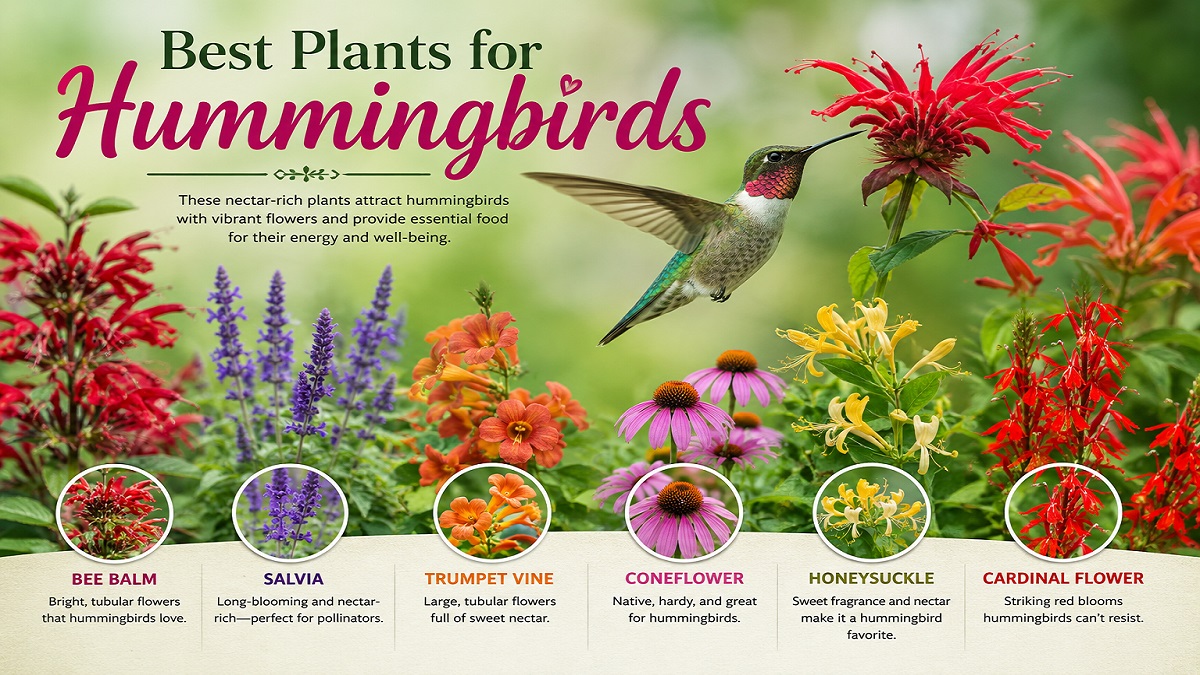
1. Bee Balm (Monarda)
Bee balm is one of the most reliable hummingbird plants available. Its bright red, pink, purple, or lavender blooms provide abundant nectar throughout summer.
This perennial thrives in sunny locations with well-drained soil and can quickly become a centerpiece of a pollinator garden. Hummingbirds are often seen hovering around its unique spiky flowers.
- Bloom Time: Summer
- Sunlight: Full sun to partial shade
- Height: 2–4 feet
- Attraction Level: Excellent
2. Cardinal Flower (Lobelia cardinalis)
The brilliant scarlet blooms of cardinal flower seem almost designed specifically for hummingbirds. Its tall flower spikes provide an impressive display while supplying large amounts of nectar.
Unlike many flowering plants, cardinal flower tolerates moist soil and can even thrive near ponds or water features.
- Bloom Time: Mid to late summer
- Sunlight: Full sun to partial shade
- Height: 2–5 feet
- Attraction Level: Outstanding
3. Salvia
Salvia varieties are among the most popular hummingbird plants because of their long-lasting tubular blooms. Available in red, purple, pink, blue, and white varieties, salvias bloom continuously when properly maintained.
Many gardeners choose salvia because it is drought-tolerant, easy to grow, and attractive to multiple pollinators.
- Bloom Time: Spring through fall
- Sunlight: Full sun
- Height: 1–5 feet depending on variety
- Attraction Level: Excellent
4. Trumpet Vine (Campsis radicans)
Trumpet vine produces large clusters of trumpet-shaped flowers that hummingbirds find irresistible. This vigorous climber can quickly cover fences, trellises, and arbors.
Its bright orange-red flowers bloom throughout summer and provide a consistent nectar source.
- Bloom Time: Summer
- Sunlight: Full sun
- Height: Up to 30 feet
- Attraction Level: Excellent
5. Columbine (Aquilegia)
Columbine blooms early in the season when hummingbirds are often searching for nectar sources after migration. The distinctive bell-shaped flowers come in numerous colors and varieties.
Because it blooms in spring, columbine helps support hummingbirds before many summer flowers begin flowering.
- Bloom Time: Spring
- Sunlight: Partial shade to full sun
- Height: 1–3 feet
- Attraction Level: Very High
Additional Flowers Hummingbirds Love
While the plants above are among the most popular choices, many other flowering species can attract hummingbirds throughout the growing season.
| Plant | Bloom Season | Flower Color | Difficulty |
|---|---|---|---|
| Petunia | Spring-Fall | Pink, Purple, Red | Easy |
| Zinnia | Summer-Fall | Multiple Colors | Easy |
| Fuchsia | Summer | Pink & Purple | Moderate |
| Coral Bells | Late Spring | Pink, Red | Easy |
| Penstemon | Spring-Summer | Red, Purple | Easy |
| Lantana | Summer-Fall | Orange, Yellow, Pink | Easy |
| Foxglove | Late Spring | Purple, Pink | Moderate |
Best Shrubs for Hummingbirds
Flowering shrubs provide larger nectar sources and often bloom for extended periods. They also offer shelter and nesting opportunities.
Butterfly Bush
Known primarily for attracting butterflies, butterfly bush also draws hummingbirds with its fragrant flower clusters. Modern cultivars are available in compact sizes suitable for smaller gardens.
Weigela
Weigela produces masses of tubular flowers in spring and early summer. Its pink, red, and crimson blossoms are especially attractive to hummingbirds.
Azalea
Many azalea varieties bloom profusely during spring migration periods, providing valuable nectar resources when hummingbirds are arriving in gardens.
Hibiscus
Large hibiscus flowers create a tropical appearance while supplying nectar-rich blooms throughout warm months.
Best Trees for Hummingbirds
Trees play an important role in hummingbird habitats by providing nesting locations, perches, shelter, and nectar.
Red Buckeye
One of the earliest blooming trees for hummingbirds, red buckeye produces striking red flower clusters that attract migrating birds.
Crabapple
Crabapple trees produce abundant spring blossoms that attract insects, which hummingbirds also consume for protein.
Tulip Tree
Tulip-shaped flowers contain large quantities of nectar and can support hummingbirds during late spring.
Flowering Cherry
These ornamental trees offer beautiful seasonal displays while supporting pollinators and hummingbirds.
Creating the Perfect Hummingbird Garden
Selecting the right plants is only part of the process. Garden design can significantly increase hummingbird activity.
Plant in Groups
Large clusters of the same flower are easier for hummingbirds to locate than isolated plants scattered throughout a landscape.
Provide Continuous Blooming
Choose flowers that bloom at different times so nectar is available from spring through fall.
Include Native Plants
Native species are often the most productive nectar sources because hummingbirds evolved alongside them.
Add Water Features
Hummingbirds enjoy shallow moving water, misters, and small fountains where they can bathe and cool off.
Create Perching Areas
Small trees, shrubs, and garden structures provide places for hummingbirds to rest between feeding sessions.
Plants to Avoid
Not all flowers are equally useful for hummingbirds. Some highly ornamental plants produce little nectar and offer minimal benefit.
When choosing plants, avoid selecting flowers solely for appearance. Research whether they actually provide nectar resources. Double-flowered varieties may look attractive but often contain less nectar than traditional single-flowered forms.
Benefits of Growing Hummingbird-Friendly Plants
A hummingbird garden offers advantages beyond attracting these remarkable birds.
- Increased pollinator diversity
- Enhanced garden beauty
- Support for local ecosystems
- Reduced dependence on artificial feeders
- Long-lasting seasonal color
- Educational opportunities for families and children
Many hummingbird plants are also drought-resistant, making them environmentally responsible choices for modern landscapes.
Seasonal Planting Strategy
To maintain hummingbird visits throughout the year, gardeners should focus on seasonal succession planting.
Spring
- Columbine
- Azalea
- Flowering Cherry
- Red Buckeye
Summer
- Bee Balm
- Cardinal Flower
- Salvia
- Trumpet Vine
Late Summer and Fall
- Lantana
- Zinnias
- Late-blooming Salvias
- Butterfly Bush
This approach ensures a constant nectar supply throughout the hummingbird season.
Conclusion
The best plants for hummingbirds combine beauty, nectar production, and long blooming periods. Bee balm, cardinal flower, salvia, trumpet vine, and columbine consistently rank among the most effective choices for attracting these energetic birds.
By incorporating a variety of flowering plants, shrubs, and trees into your landscape, you can create a thriving habitat that supports hummingbirds from spring migration through fall. The result is a colorful, vibrant garden filled with movement, pollination activity, and opportunities to observe one of nature's most captivating creatures.
Whether you have a large backyard or a small patio garden, selecting nectar-rich plants can transform your outdoor space into a hummingbird haven that provides enjoyment year after year.