Best Native Plants for Bees: Create a Pollinator-Friendly Garden Naturally
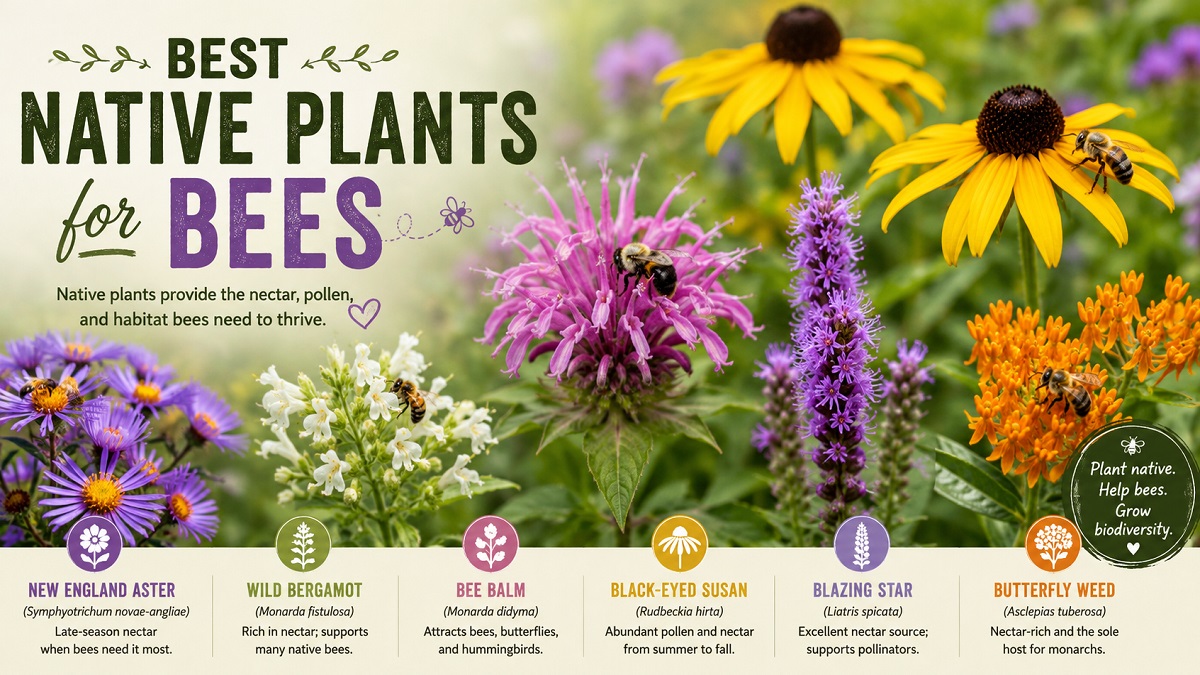
Introduction
Bees play an essential role in healthy ecosystems and productive gardens. They pollinate flowering plants, vegetables, herbs, fruit trees, and many wild species that support biodiversity. Yet bee populations face increasing pressure from habitat loss, changing climates, urban expansion, and reduced availability of flowering plants.
One of the most effective ways gardeners can support pollinators is by planting native species. Native plants evolved alongside local bees over thousands of years and naturally provide the nectar, pollen, shelter, and seasonal timing bees depend on.
Unlike highly modified ornamental flowers that may offer little nutrition, native flowering plants create reliable food sources throughout the growing season while requiring less maintenance once established.
This guide explores the best native plants for bees, how to design a pollinator-friendly garden, seasonal planting ideas, and practical maintenance tips.
Why Native Plants Matter for Bees
Native plants offer several advantages over non-native ornamental species.
- Produce nectar and pollen adapted to local bee species
- Flower at natural seasonal intervals
- Require less water after establishment
- Support entire ecosystems beyond pollinators
- Encourage stronger biodiversity
- Reduce dependence on fertilizers and pesticides
Many native bees collect pollen from only certain plant groups. A diverse native garden creates continuous food availability from spring through autumn.
How to Choose Native Plants for Your Area
Native species vary by region, so the ideal plant list depends on local climate and growing conditions.
Evaluate Your Garden Conditions
- Hours of sunlight
- Soil texture and drainage
- Available space
- Seasonal rainfall
- Container versus in-ground planting
Prioritize Bloom Diversity
Select plants that bloom at different times of the year to ensure bees always have access to food.
Best Native Plants for Bees
| Plant | Bloom Season | Sun | Bee Attraction |
|---|---|---|---|
| Bee Balm | Summer | Full Sun | Excellent |
| Black-Eyed Susan | Summer–Fall | Full Sun | High |
| Purple Coneflower | Summer | Full Sun | Excellent |
| Goldenrod | Late Summer | Full Sun | Excellent |
| Milkweed | Summer | Sun–Partial Shade | High |
| Asters | Fall | Sun–Partial Shade | Excellent |
| Wild Lupine | Spring | Full Sun | Moderate–High |
| Blanket Flower | Summer | Full Sun | High |
Top Native Bee Plants Explained
1. Bee Balm
Bee balm produces vibrant tubular blooms that attract honeybees, bumblebees, and beneficial insects. It performs best in sunny locations with moderate watering.
2. Purple Coneflower
This long-blooming perennial supports many native bee species and provides visual appeal throughout summer.
3. Goldenrod
Goldenrod becomes especially valuable in late summer when nectar resources begin declining.
4. Milkweed
Known for supporting butterflies, milkweed also supplies nectar to bees and many other pollinators.
5. Asters
Late-season flowering makes asters extremely valuable for sustaining bees before cooler weather arrives.
Designing a Bee-Friendly Native Garden
Plant in Groups
Large clusters of the same flower are easier for bees to locate than isolated plants.
Include Multiple Flower Shapes
Different bee species vary in tongue length and feeding behavior.
Create Continuous Bloom Cycles
- Spring flowers
- Summer bloomers
- Late-season nectar sources
Add Water Sources
A shallow dish with stones provides safe landing areas for bees.
Native Plant Garden Layout Example
A balanced bee garden may include:
- Background: Goldenrod and asters
- Middle layer: Coneflowers and bee balm
- Front border: Blanket flower and smaller natives
- Corner sections: Milkweed clusters
Layering increases bloom visibility and creates a natural habitat appearance.
Plants to Avoid in Bee Gardens
Not every attractive flower benefits pollinators.
- Highly double-petaled flowers
- Artificially bred nectar-poor varieties
- Invasive species
- Plants requiring heavy pesticide use
When possible, choose untreated nursery plants.
Seasonal Care Tips
Spring
Prepare soil and establish new plantings.
Summer
Water deeply but less frequently.
Autumn
Leave seed heads and stems for habitat.
Winter
Avoid excessive cleanup to protect overwintering pollinators.
Benefits Beyond Bees
Native plant gardens support:
- Butterflies
- Bird populations
- Beneficial insects
- Natural pest control
- Healthier soil ecosystems
- Reduced maintenance costs
A pollinator garden becomes more resilient and productive over time.
Common Mistakes to Avoid
- Planting only one flowering species
- Using pesticides during bloom periods
- Removing all natural garden debris
- Overwatering established native plants
- Ignoring bloom timing across seasons
Final Thoughts
Creating a bee-friendly landscape does not require a large garden or complicated maintenance. Even small spaces can provide meaningful habitat when planted with regionally appropriate native flowers.
By selecting diverse blooming plants, reducing chemical use, and supporting natural habitat conditions, gardeners help sustain healthy bee populations while building vibrant, resilient outdoor spaces.
Every native flower added to the landscape becomes part of a larger network supporting pollinators and healthier ecosystems.