Biological Pest Control: A Sustainable Solution for Healthy Gardens and Farms
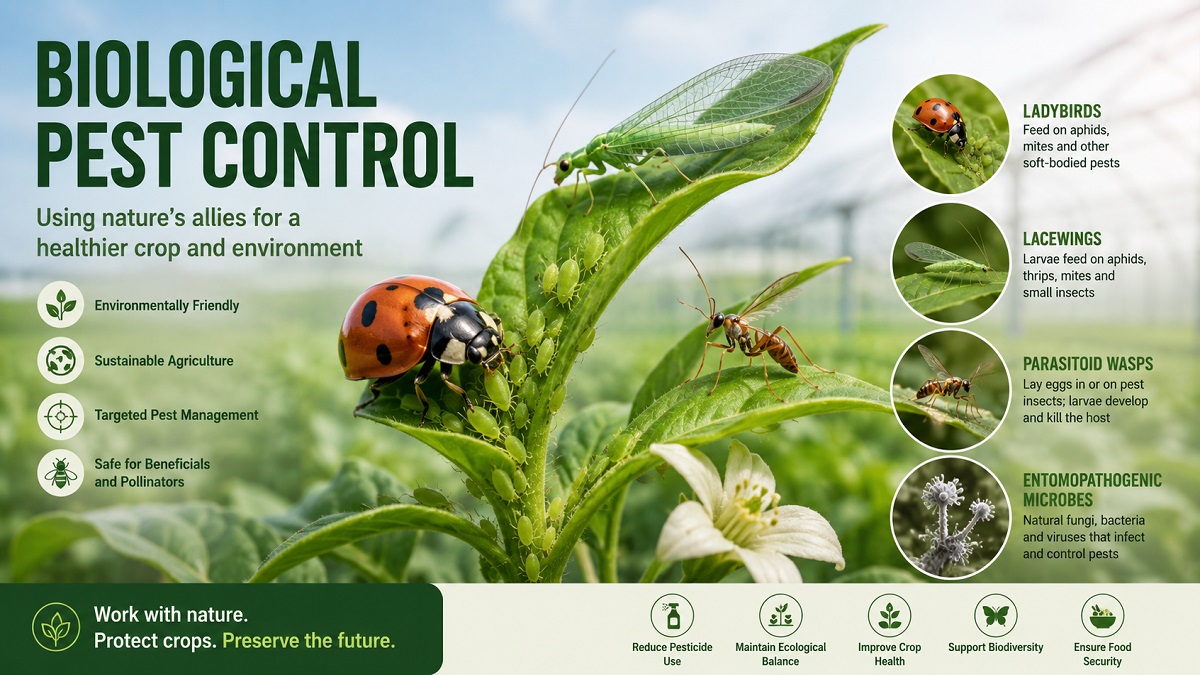
What Is Biological Pest Control?
Biological pest control is a natural method of managing harmful insects, weeds, and plant diseases by using living organisms. Instead of relying heavily on chemical pesticides, gardeners and farmers introduce or encourage beneficial organisms that naturally suppress pest populations. These beneficial organisms include predators, parasites, pathogens, and microorganisms that target specific pests while leaving crops, people, pets, and the environment largely unharmed.
For centuries, nature has maintained balance through predator-prey relationships. Ladybugs consume aphids, birds feed on caterpillars, and parasitic wasps control numerous agricultural pests. Modern biological pest control simply harnesses these natural relationships to create healthier and more sustainable growing environments.
As concerns about pesticide resistance, environmental pollution, and pollinator decline continue to grow, biological pest control has become an increasingly important component of integrated pest management (IPM) programs around the world.
How Biological Pest Control Works
The principle behind biological pest control is simple: introduce or support natural enemies that keep pest populations below damaging levels. Instead of eliminating every pest, biological control seeks to maintain ecological balance.
Beneficial organisms work through several mechanisms:
- Predation, where one organism consumes another.
- Parasitism, where a parasite develops on or inside a pest.
- Disease transmission through bacteria, fungi, or viruses.
- Competition for resources that limits pest survival.
- Disruption of pest reproduction and life cycles.
When these natural enemies are present in sufficient numbers, pest outbreaks become less frequent and less severe. This creates a more stable ecosystem that requires fewer chemical interventions.
Types of Biological Pest Control
1. Classical Biological Control
Classical biological control involves introducing a natural enemy from a pest's native habitat into a new area where the pest has become invasive. Scientists carefully evaluate potential biological control agents to ensure they target only the intended pest.
This method has been successfully used to manage invasive insects, weeds, and agricultural pests worldwide. Once established, the beneficial organism may continue controlling the pest for years with little additional intervention.
2. Augmentative Biological Control
Augmentative control involves releasing beneficial organisms in larger numbers to quickly suppress pest populations. These releases may be:
- Inoculative releases: Small numbers released early in the season.
- Inundative releases: Large-scale releases for immediate pest reduction.
Greenhouses commonly use augmentative releases of predatory mites and parasitic wasps to control insect infestations.
3. Conservation Biological Control
Conservation biological control focuses on protecting and encouraging naturally occurring beneficial organisms. Gardeners can achieve this by planting diverse vegetation, reducing pesticide use, and providing habitats such as flowering plants and insect shelters.
This approach is often the most affordable and environmentally friendly biological control strategy.
Common Beneficial Insects Used in Biological Pest Control
Many insects play valuable roles in controlling garden and agricultural pests.
| Beneficial Insect | Targets | Primary Benefit |
|---|---|---|
| Ladybugs | Aphids, mites, whiteflies | Rapid predator of soft-bodied pests |
| Lacewings | Aphids, mealybugs, thrips | Highly effective larvae predators |
| Parasitic Wasps | Caterpillars, aphids, whiteflies | Parasitize and kill pests |
| Predatory Mites | Spider mites | Excellent greenhouse control |
| Ground Beetles | Slugs, larvae, caterpillars | Nighttime pest suppression |
| Hoverflies | Aphids | Pollination and pest control |
Encouraging these beneficial insects can dramatically reduce pest pressure in vegetable gardens, orchards, and ornamental landscapes.
Microbial Biological Control Agents
Not all biological control agents are insects. Microorganisms such as bacteria, fungi, viruses, and nematodes can also provide highly effective pest management.
Bacillus thuringiensis (Bt)
Bt is a naturally occurring bacterium widely used against caterpillars and certain insect larvae. When consumed by susceptible pests, it disrupts their digestive system and causes death while remaining relatively safe for humans and many beneficial organisms.
Beneficial Nematodes
Microscopic nematodes can be applied to soil where they attack grubs, beetle larvae, fungus gnats, and other soil-dwelling pests.
Entomopathogenic Fungi
Certain fungi infect and kill insects naturally. These fungi can help control aphids, whiteflies, thrips, and other agricultural pests.
Viral Controls
Specific viruses can target pest insects without affecting non-target species, making them useful tools in sustainable agriculture.
Benefits of Biological Pest Control
Biological pest control offers numerous advantages compared to conventional chemical pest management.
- Reduces dependence on synthetic pesticides.
- Minimizes environmental contamination.
- Protects pollinators and beneficial insects.
- Helps prevent pesticide resistance.
- Supports long-term ecological balance.
- Improves soil and ecosystem health.
- Can provide long-lasting pest suppression.
- Suitable for organic gardening and farming.
Because biological control methods work with natural ecological systems rather than against them, they contribute to sustainable food production and biodiversity conservation.
Challenges and Limitations
While biological pest control offers many advantages, it is not a perfect solution for every situation.
Slower Results
Natural enemies often require time to establish and build populations. Unlike chemical pesticides that may kill pests quickly, biological controls frequently work more gradually.
Environmental Dependence
Temperature, humidity, rainfall, and seasonal changes can influence the effectiveness of biological control agents.
Specific Pest Targets
Many biological control agents are highly specialized. This specificity is environmentally beneficial but may require multiple agents to manage different pest species.
Knowledge Requirements
Successful implementation often requires understanding pest life cycles, beneficial insect behavior, and ecosystem dynamics.
Despite these challenges, biological control remains one of the most sustainable long-term pest management approaches available.
Biological Pest Control in Home Gardens
Home gardeners can easily incorporate biological control methods into their landscapes and vegetable plots.
Plant Pollinator-Friendly Flowers
Flowering plants such as dill, fennel, alyssum, marigolds, cosmos, and yarrow provide nectar and pollen that attract beneficial insects.
Reduce Broad-Spectrum Pesticides
Many pesticides kill both pests and beneficial insects. Reducing pesticide use allows natural predators to thrive.
Create Habitat Diversity
A variety of plant species encourages a balanced ecosystem where beneficial organisms can find food and shelter throughout the year.
Provide Water Sources
Shallow water dishes and small garden ponds support insects, birds, and other natural pest predators.
Use Companion Planting
Certain plants attract beneficial insects while deterring pests, enhancing overall biological control effectiveness.
Biological Control in Commercial Agriculture
Commercial growers increasingly integrate biological control into large-scale farming systems. Greenhouse vegetable production frequently relies on beneficial insects and mites to manage pests without excessive pesticide applications.
Fruit orchards, vineyards, and field crops also benefit from conservation biological control practices such as cover cropping, flowering strips, hedgerows, and reduced pesticide programs.
These methods improve biodiversity while helping producers meet consumer demand for environmentally responsible food production.
| Control Method | Environmental Impact | Long-Term Sustainability |
|---|---|---|
| Biological Control | Low | High |
| Chemical Control | Moderate to High | Lower |
| Mechanical Control | Low | Moderate |
| Cultural Control | Very Low | High |
Integrating Biological Pest Control with IPM
Integrated Pest Management (IPM) combines multiple pest control strategies to achieve effective, economical, and environmentally sound results. Biological control plays a central role within IPM systems.
An IPM program may include:
- Regular pest monitoring.
- Identification of pest thresholds.
- Habitat management.
- Biological control agents.
- Cultural practices.
- Selective pesticide use only when necessary.
By combining these approaches, growers can minimize pest damage while reducing environmental impacts and preserving beneficial organisms.
The Future of Biological Pest Control
As agriculture and gardening continue moving toward sustainability, biological pest control is expected to play an increasingly important role. Advances in biotechnology, ecological research, and integrated pest management are improving the effectiveness and availability of biological control agents.
Scientists are discovering new beneficial microorganisms, refining release strategies, and developing habitat management techniques that support natural enemies. These innovations will help growers reduce chemical pesticide use while maintaining crop productivity and environmental health.
Whether in a backyard vegetable garden or a commercial farm, biological pest control offers a practical path toward healthier ecosystems and more sustainable food production systems.